
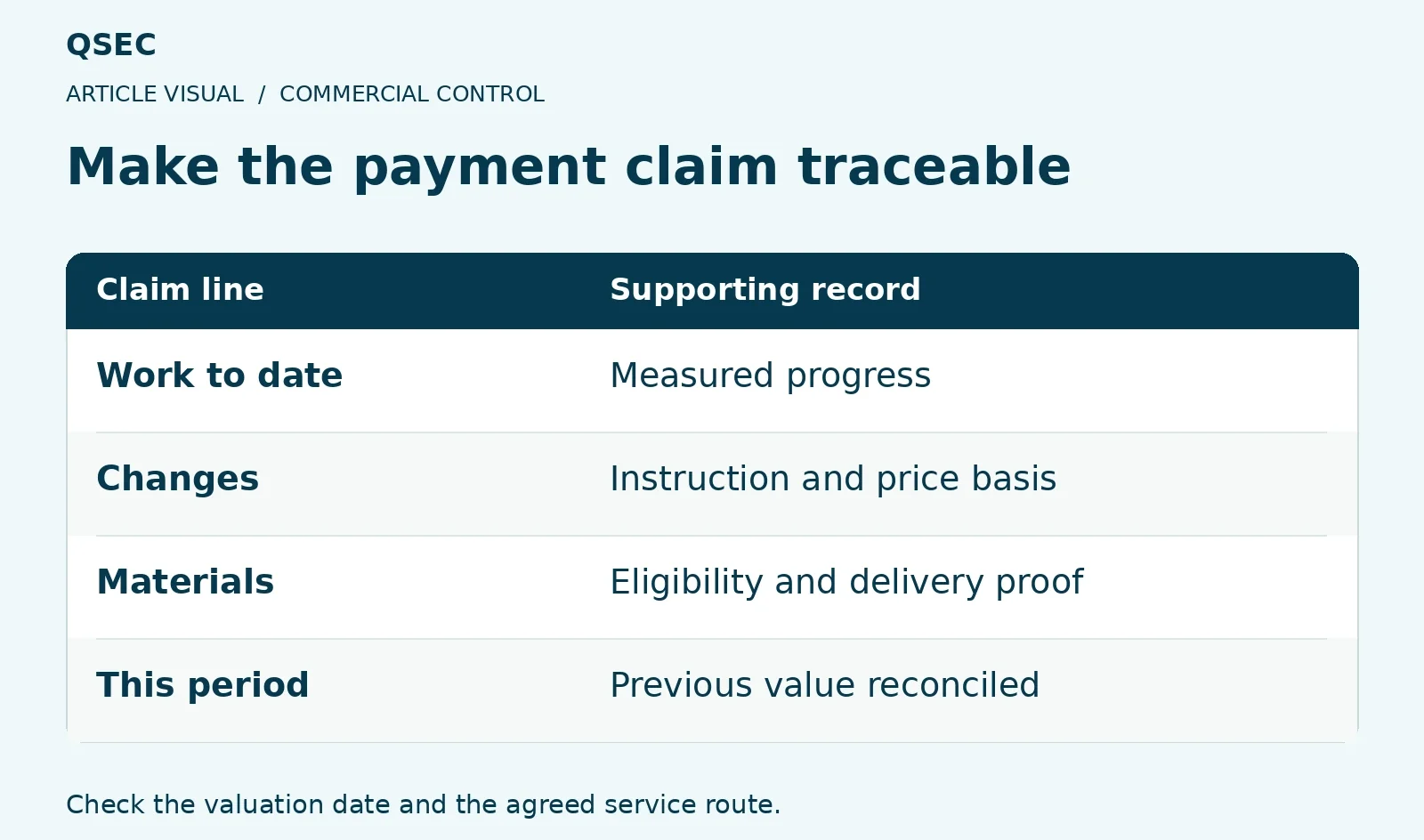
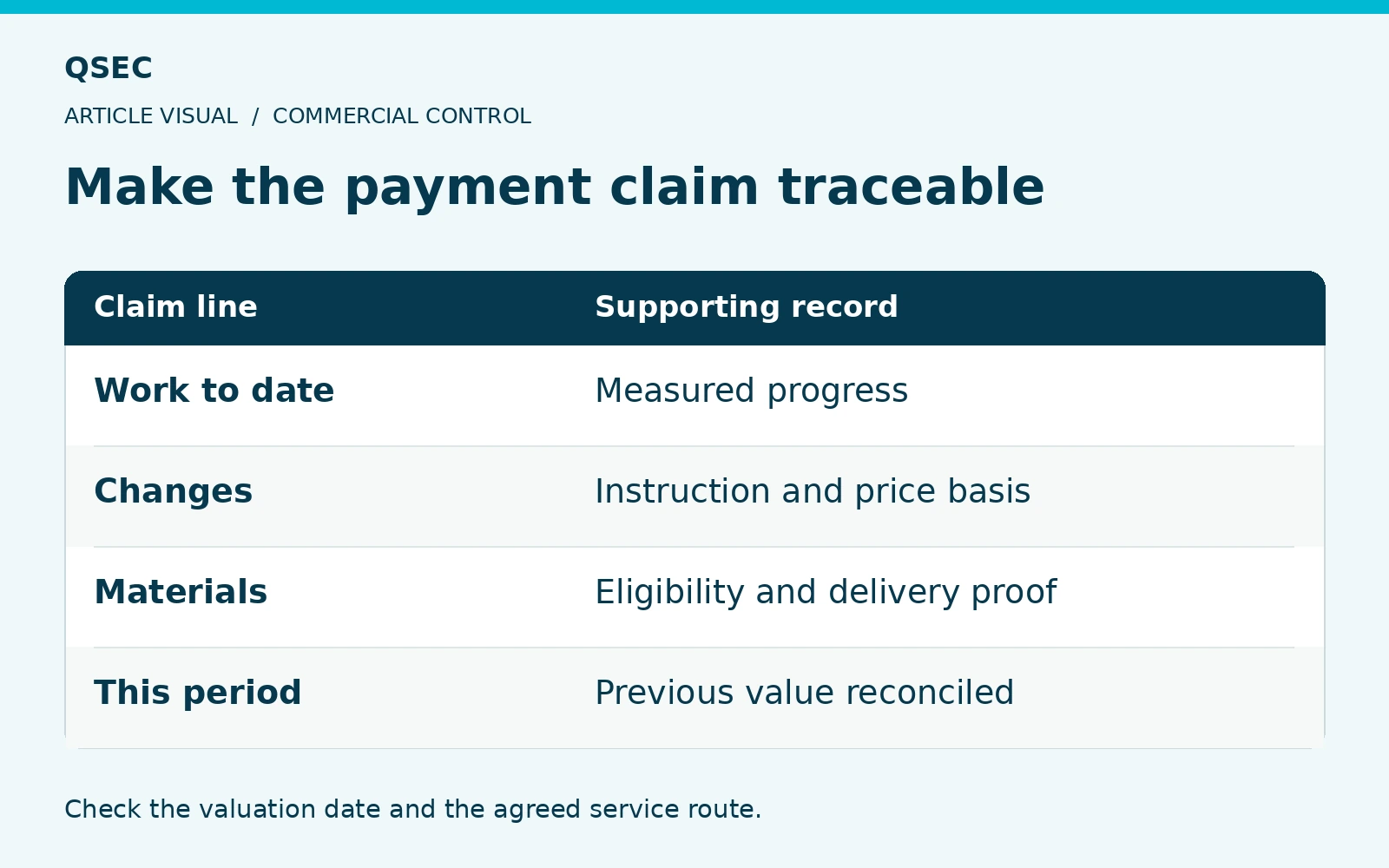
A payment claim is easier to check when each amount links to work and a date. Use the agreed breakdown so the other party can follow progress, changes and the sum now sought.
Can the reader follow the sum claimed back to progress on site?
Interim Valuation Evidence: Check Dates And Service
Read the terms for the date used to value work, the submission date and the service route. Keep the exact claim issued and proof it was sent.
Show the prior total, work added this period and value to date. Keep the total work value apart from this cycle's payment.
Support The Claimed Work
Link quantities and progress to plans, photos and site notes. Show changes with their status and the rates used.
Check retention, deductions and sums paid before. Do not claim next month's planned work as progress already achieved.
A neat application needs evidence behind it. Which record supports each value?
- Dates and service
Check the cut-off and submission route.
- Progress records
Link measures, photos and work completed.
- Materials
Apply the contract’s evidence and valuation rules.
Use the cut-off, measured progress and material rules to build the claim on the right basis.
Review Materials And Notices
Check the rules for goods on or off site before including them. Review ownership, insurance, storage and any vesting or bond terms.
The application for payment, valuation and notices can have distinct roles. Check the contract and law so the team knows which steps are needed and when.
General guidance. Check your signed contract and the job facts. Get legal advice where needed.