
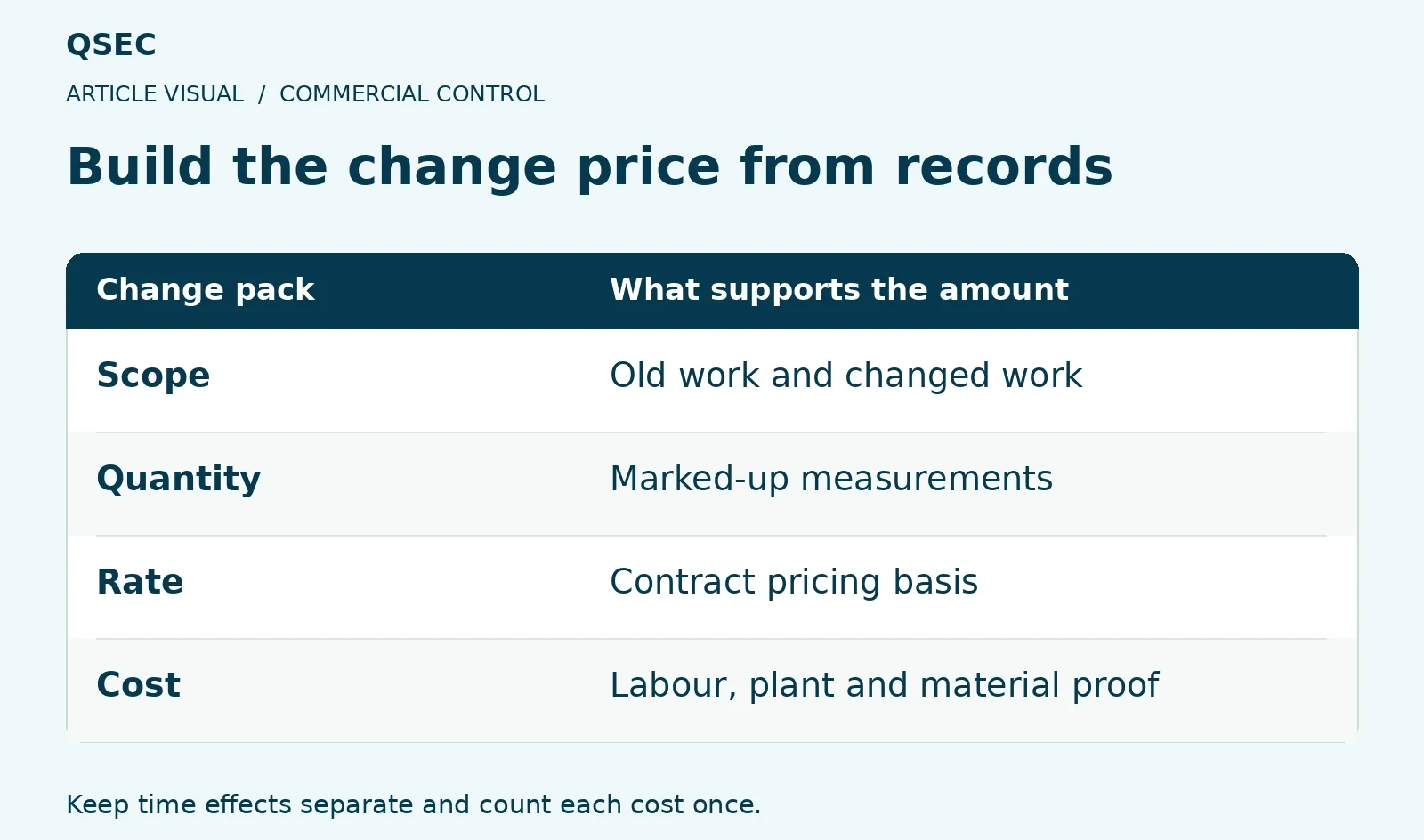
A variation needs more than a trade quote. Show the change in work, the instruction or event behind it and the rate basis the contract requires.
An instruction describes work. Does your price show exactly what changed?
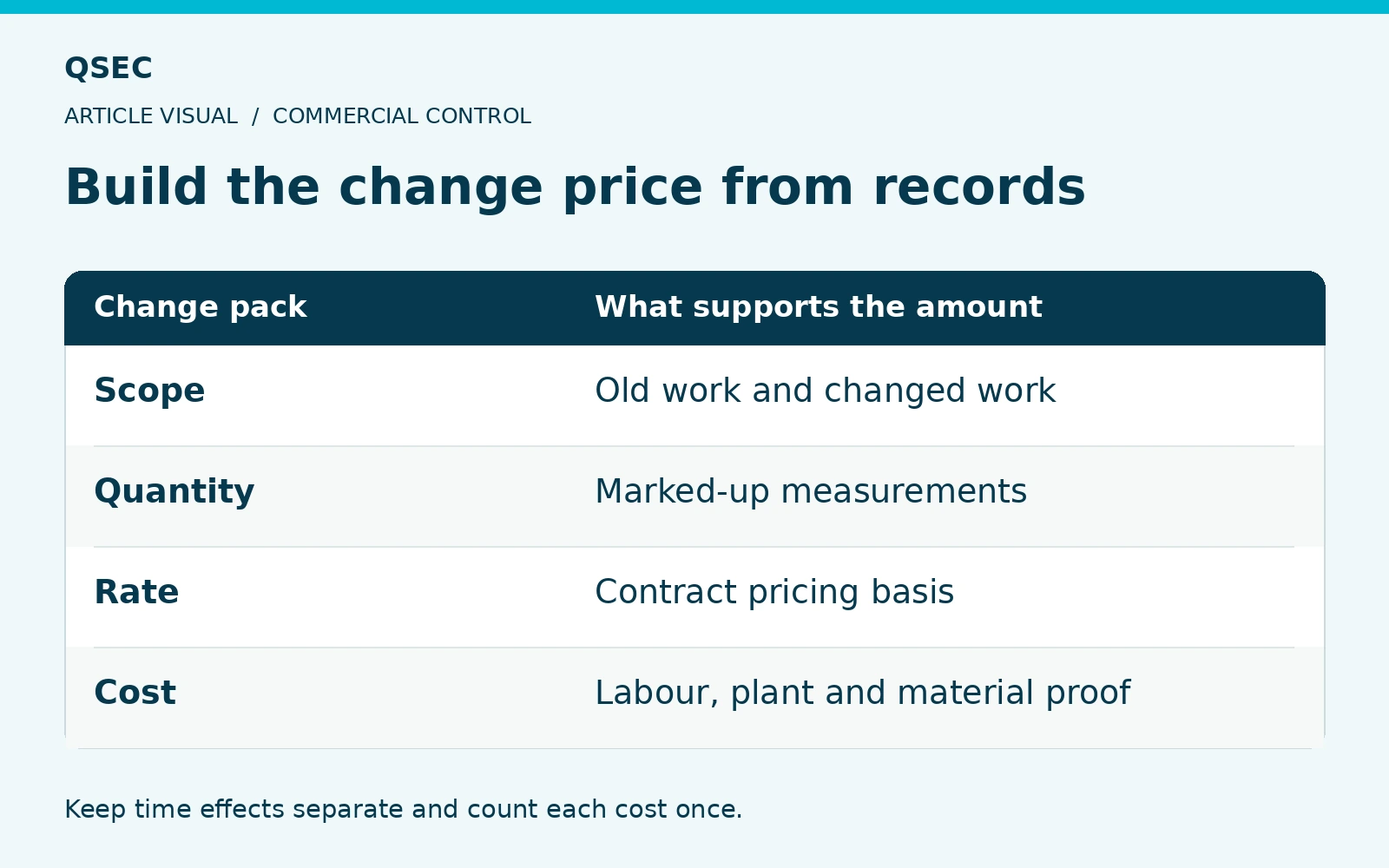
Price A Construction Variation: Set Out The Change
Use one code for the event and show the old and new work side by side. Measure work added and taken out, with abortive work where needed.
Link plans, instructions and notices. Check who may instruct work and how the terms deal with the change before treating a quote as a sum due.
Use The Contract's Rate Basis
Check whether old rates apply, need a change or must be replaced. Build new rates from labour, plant, materials and a clear output rate.
Show waste, access and allowed additions. Credit work removed as the terms require and check each cost is counted once.
The scope difference is clear. Can the reader trace the rate and time effect too?
- Old and new scope
Show additions, omissions and measures.
- Rate basis
Use the contract’s valuation rules.
- Time effect
Explain the changed sequence or duration.
Keep the instruction, scope comparison and pricing basis linked without treating one as agreement to all three.
Keep Time Effects Clear
Show effects on sequence, output and duration with dated records. The direct work price and wider time costs may use different claim routes.
Keep each version and explain price changes. If urgent work starts before value is agreed, follow the instruction and notice steps while keeping site records current.
Ask the site lead to keep hours and plant by task as work is done, so the price can be checked later.
General guidance. Check your signed contract and the job facts. Get legal advice where needed.