
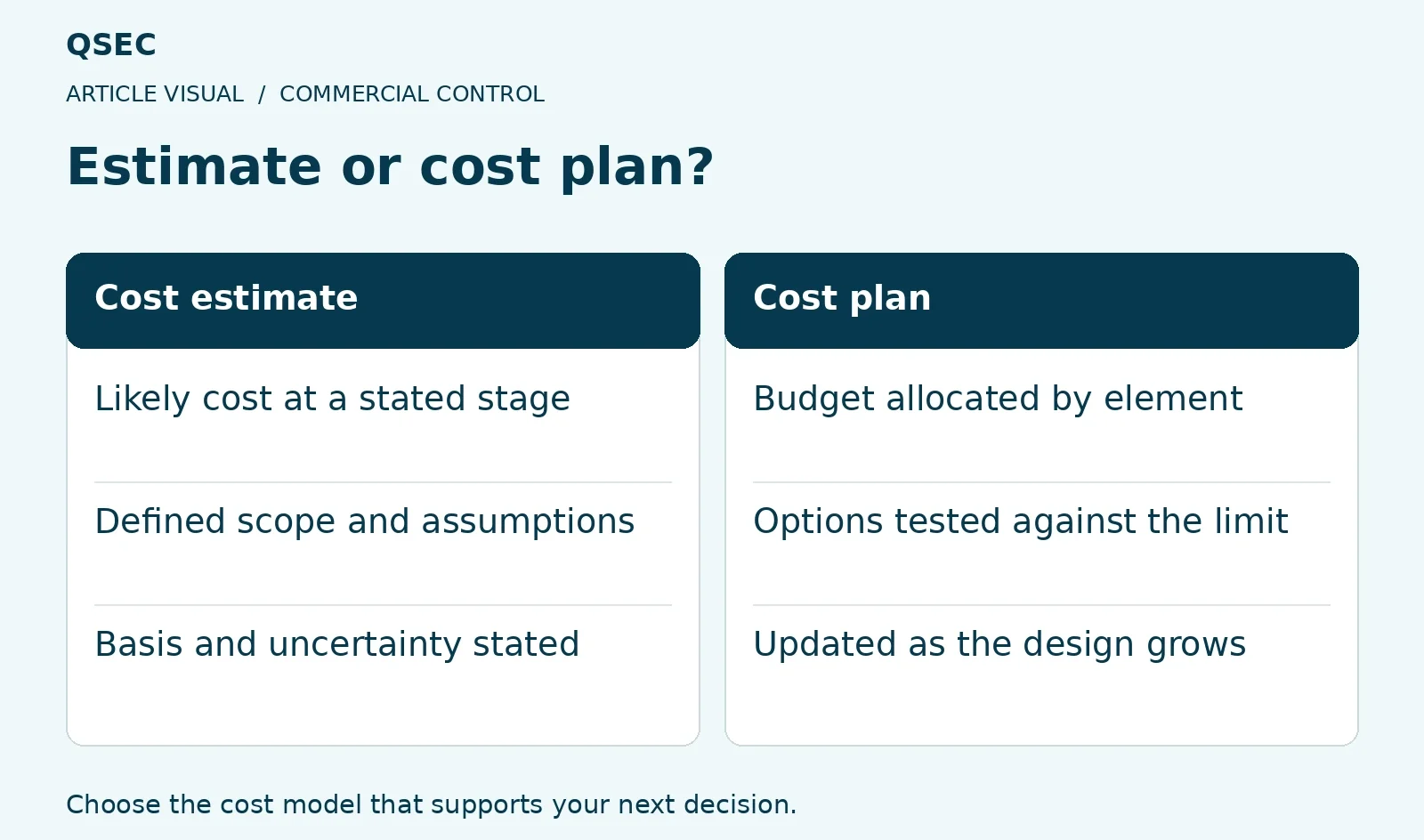
An estimate and a cost plan both deal with likely cost, but they serve a distinct purpose. Knowing which you need helps you ask for the right advice at the right stage.
Do you need a price for the scope, or a plan to guide design choices?
Cost Estimate Vs Cost Plan: What An Estimate Tells You
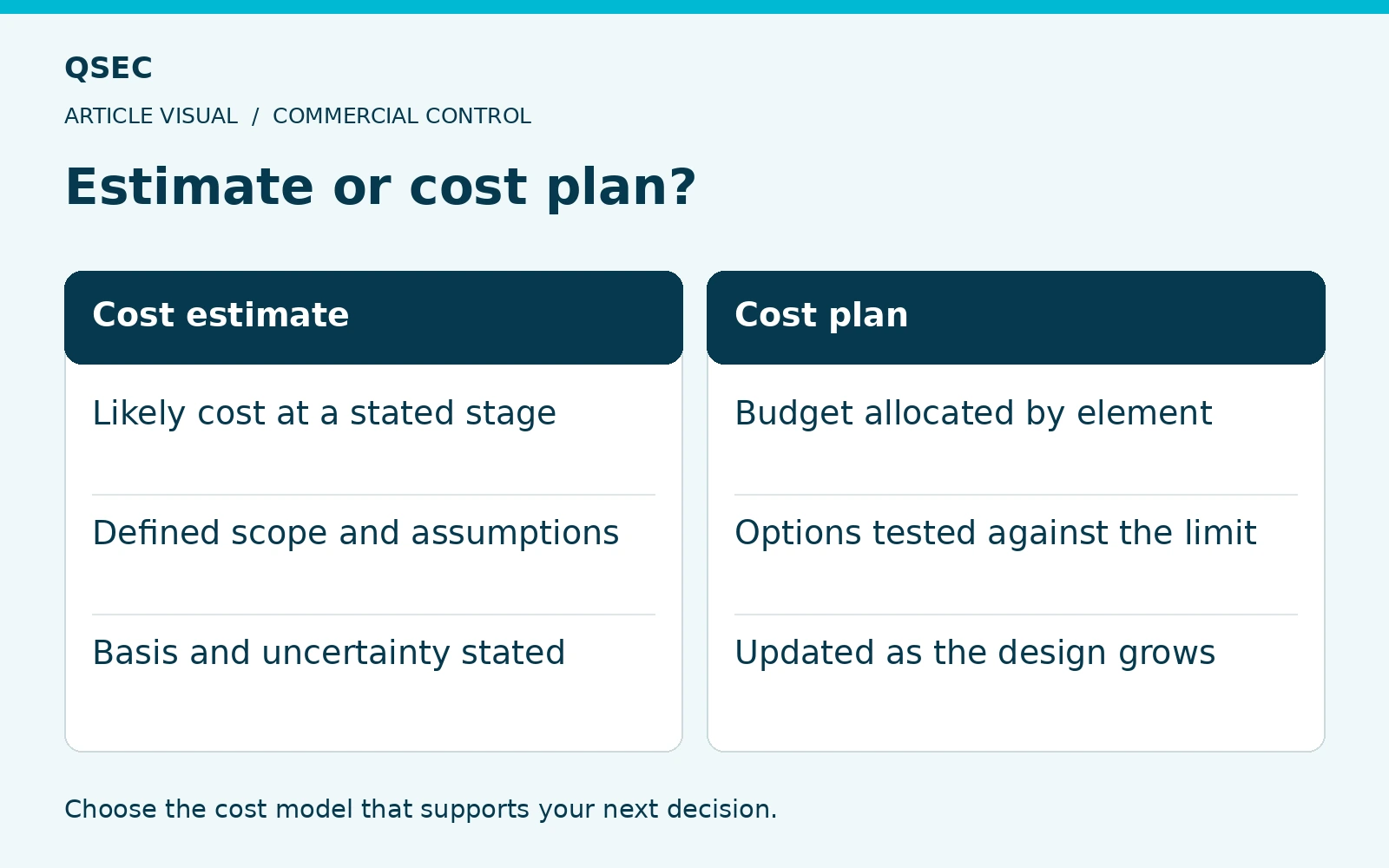
An estimate forecasts the cost of a stated scope at a point in time. It may use broad rates for an early idea or measured quantities and trade quotes for a detailed tender.
Its value depends on the records behind it. Check the drawings, rates, programme and exclusions, as well as the total. State how fees, VAT, inflation and risk have been treated.
How A Cost Plan Helps
A cost plan gives the forecast a structure that can be checked against the agreed budget. Costs are usually grouped by building element or trade, with allowances and risks shown clearly.
As the design develops, the team can see where costs have moved and decide what to change. Keep the earlier plan so each movement can be traced to its cause.
Both files show a price. Which one helps you make the next choice?
- Estimate
Forecast a stated scope at a point in time.
- Cost plan
Structure costs against the agreed budget.
- Tender check
Compare the issued scope on the same basis.
Agree scope and price date before comparing the figures or treating a gap as a saving.
Use The Right Tool At Each Stage
An early estimate can test whether a job fits the budget. Once the brief and budget are agreed, it may form the starting point for a cost plan that guides the design.
A tender estimate prices the issued scope and planned way of building it. Compare figures on the same scope and price date before treating a gap as a saving.
General guidance. Check your signed contract and the job facts. Get legal advice where needed.