
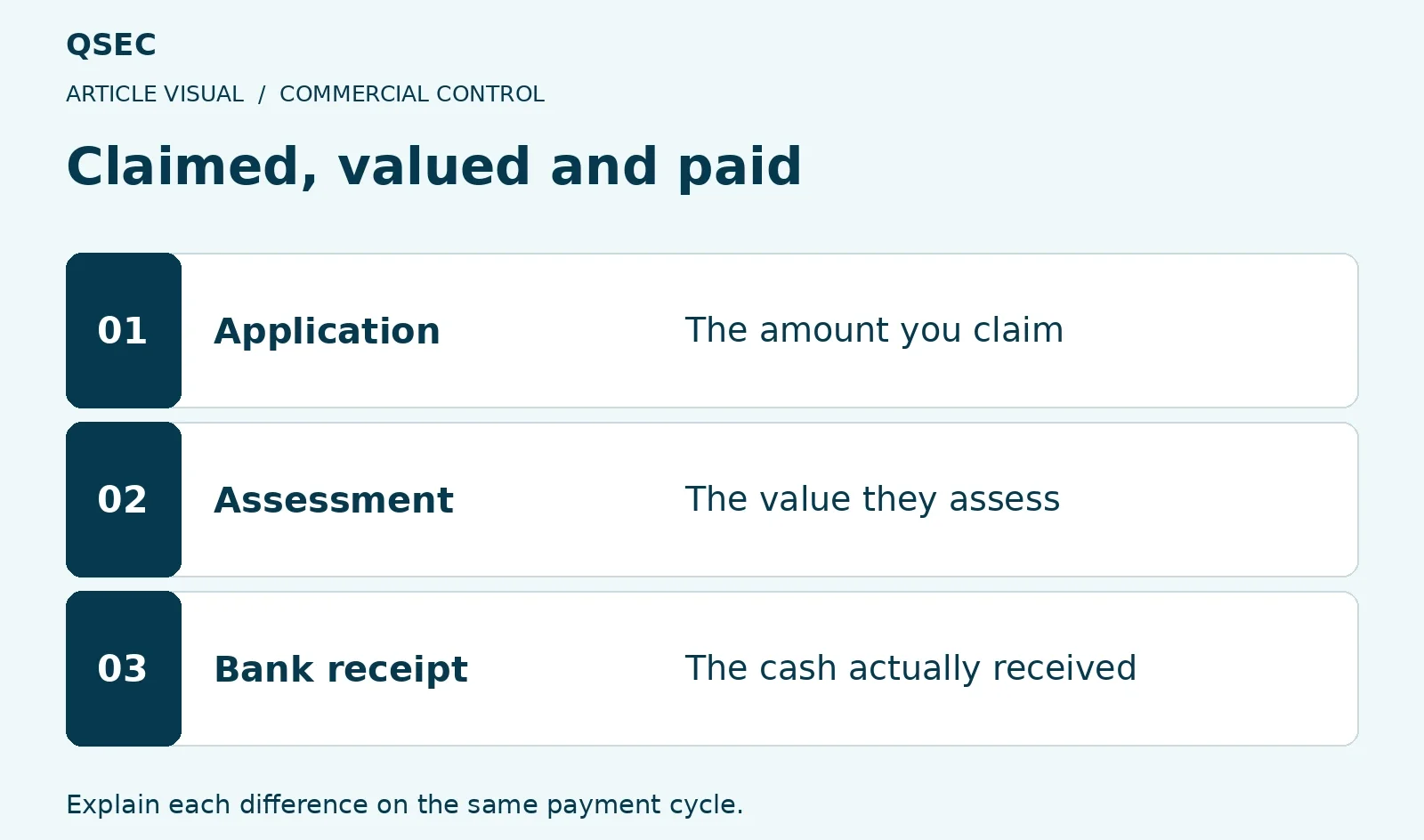
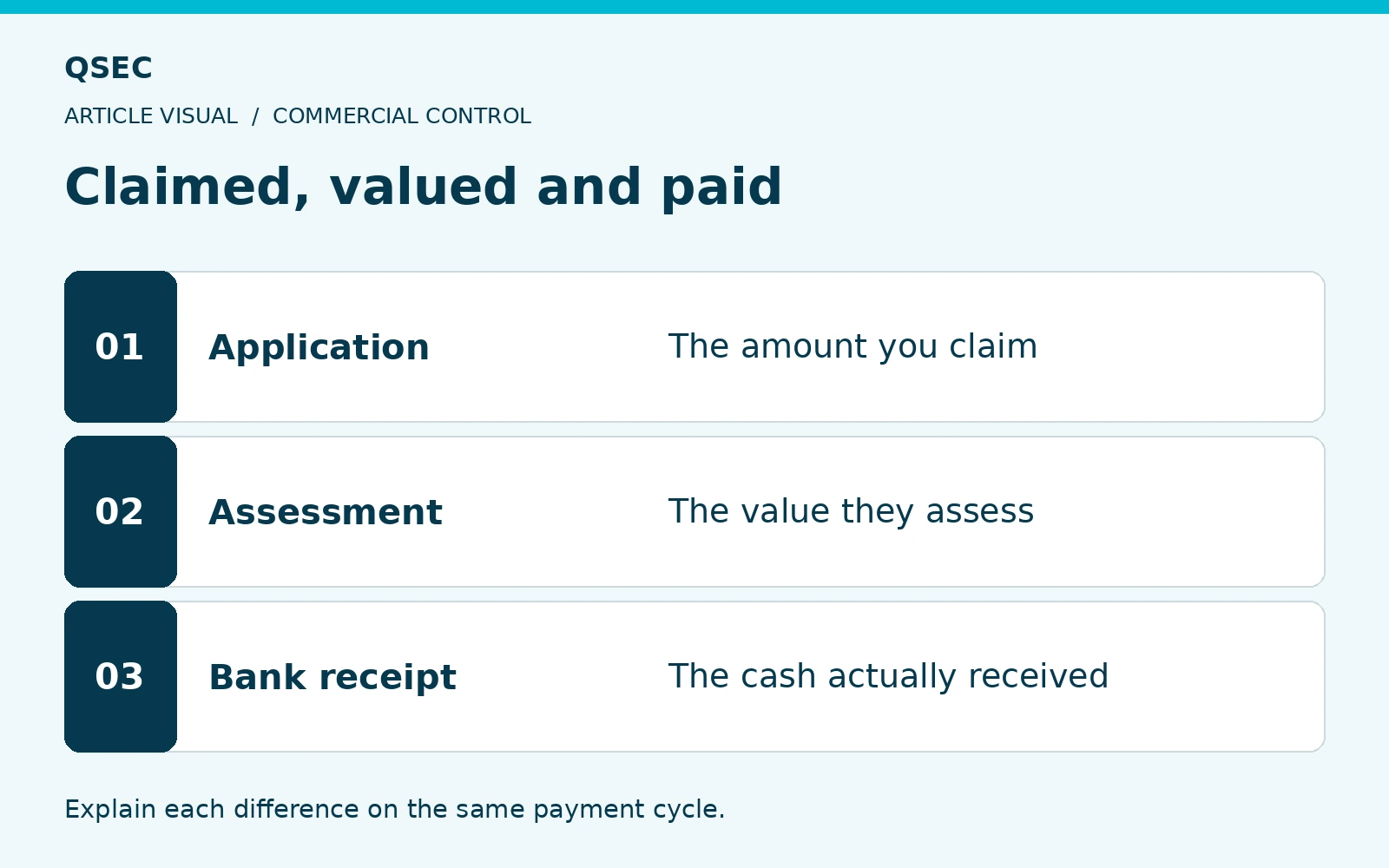
You may claim one sum, have a lower sum valued and receive a third amount in the bank. Each figure needs its own label so the team can see why they differ.
Which number is your application, and which money has reached the bank?
Application For Payment Vs Valuation: Track Each Sum
Link the claim to progress records and changes using the same work breakdown. Add the valuation, notices and proof of service to that record.
Show the total work to date and this period's amount on their own. A total value is not the same as the payment sought this month.
Show Why The Sums Differ
Check dates, measures, rates and missing records. Record retention, other deductions and sums paid before. Show the point in dispute for each change.
The contract and notice rules help decide the sum due. A lower value assessment does not, on its own, show what must be paid.
The assessment is lower than the claim. Which figure is the team discussing?
- Applied for
The sum submitted with your claim.
- Valued or assessed
The amount assessed on the stated basis.
- Paid
The cash actually received.
Label the three values clearly before checking the payment terms and any notice.
Carry The Right Figures Forward
Keep open points in view in the next cycle. Save each claim version and note what changed, so the team can trace the figures.
A new claim may not reset the notice dates. A cost report should keep claimed, assessed, certified where needed, paid and forecast sums clear. Each one serves a distinct purpose.
General guidance. Check your signed contract and the job facts. Get legal advice where needed.