
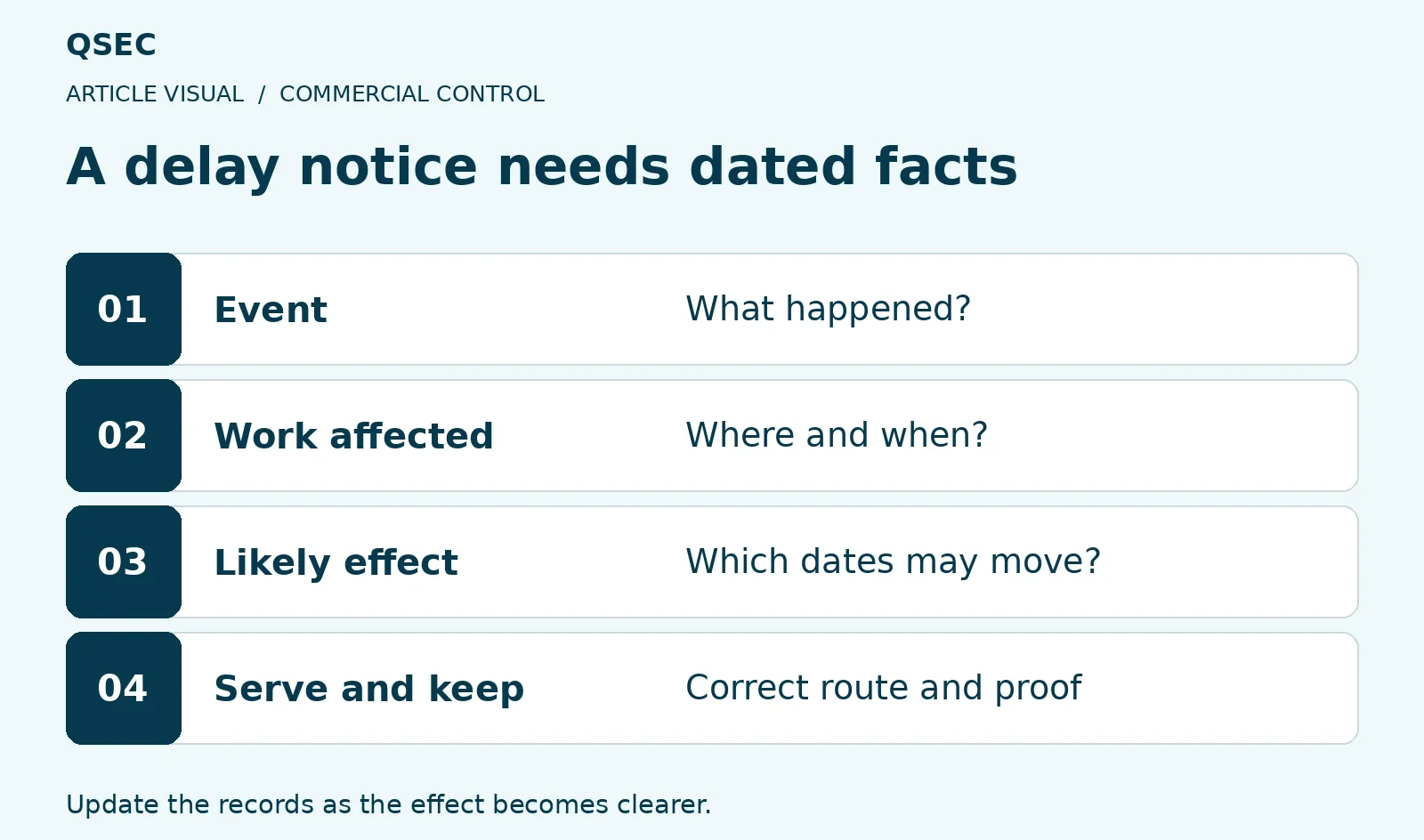
A delay notice should identify what happened and which work may be affected. A general complaint may leave the other side unclear and fail the process required by the contract.
Can your delay record show what happened without relying on blame?
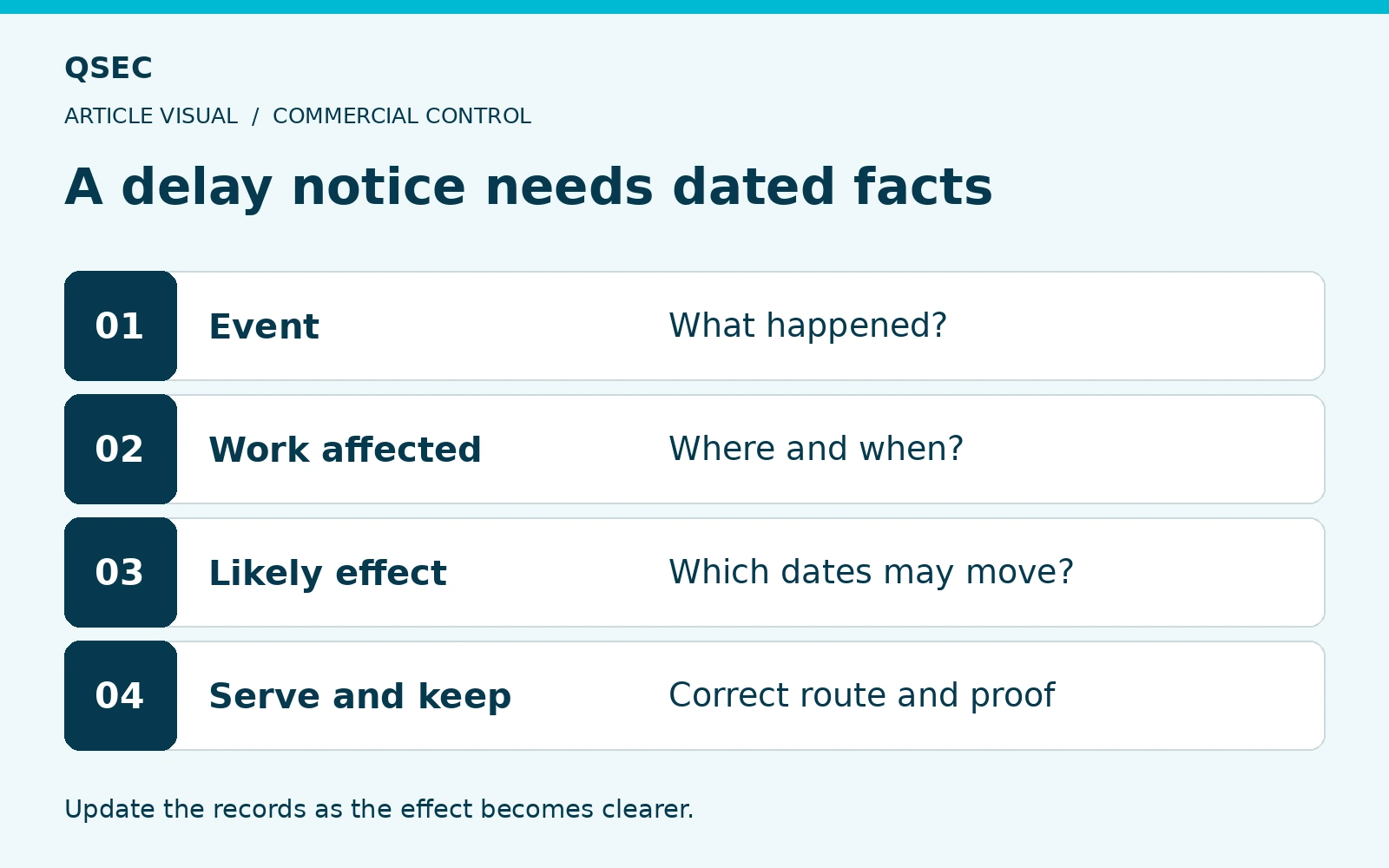
Check Your Construction Delay Notice Rules
Read who must notify, when, what to include and how to serve. Do not wait for a final cost or delay total if prompt notice is required.
State the event, date and tasks at risk. Keep the issued notice and proof of service under one event code.
State facts you can check in the first notice. If more detail is still due, say what is known now and when it will follow. Link it to the site notes.
Record What Changed
Save the first programme and updates from the time. Link site notes, design queries, orders and resource records to the work affected.
Show steps taken to reduce delay and changes in access or sequence. A notice does not alone prove the right to more time; the cause and effect still need review.
The event date is recorded. Which planned work did it actually affect?
- Event
State what happened, where and when.
- Work affected
Identify the task, resources and sequence.
- Notice and update
Use the required route and retain receipts.
Link the notice to the task impact and keep the service proof and later updates.
Keep The Position Current
Send updates as the terms require. Show how the likely effect has changed since the first notice.
Test each cause and any overlap with other delay. Keep old versions of notices and programme data so a later review can follow what the team knew at the time.
General guidance. Check your signed contract and the job facts. Get legal advice where needed.