
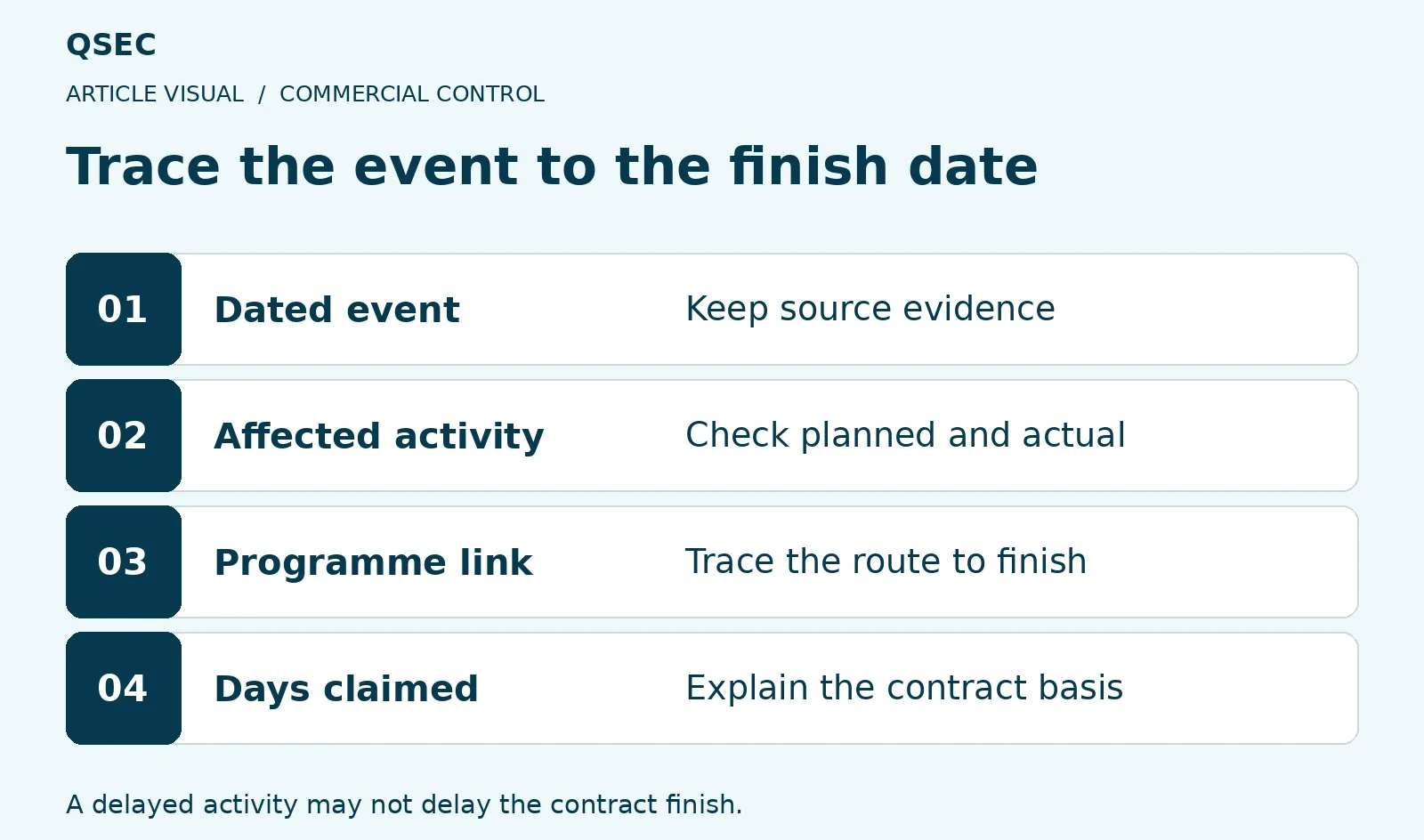
A late drawing may delay a task without delaying the finish of the job. An extension of time case needs to show how the event moved the route to the contract end date.
A late activity does not always mean a late project. Which link matters here?
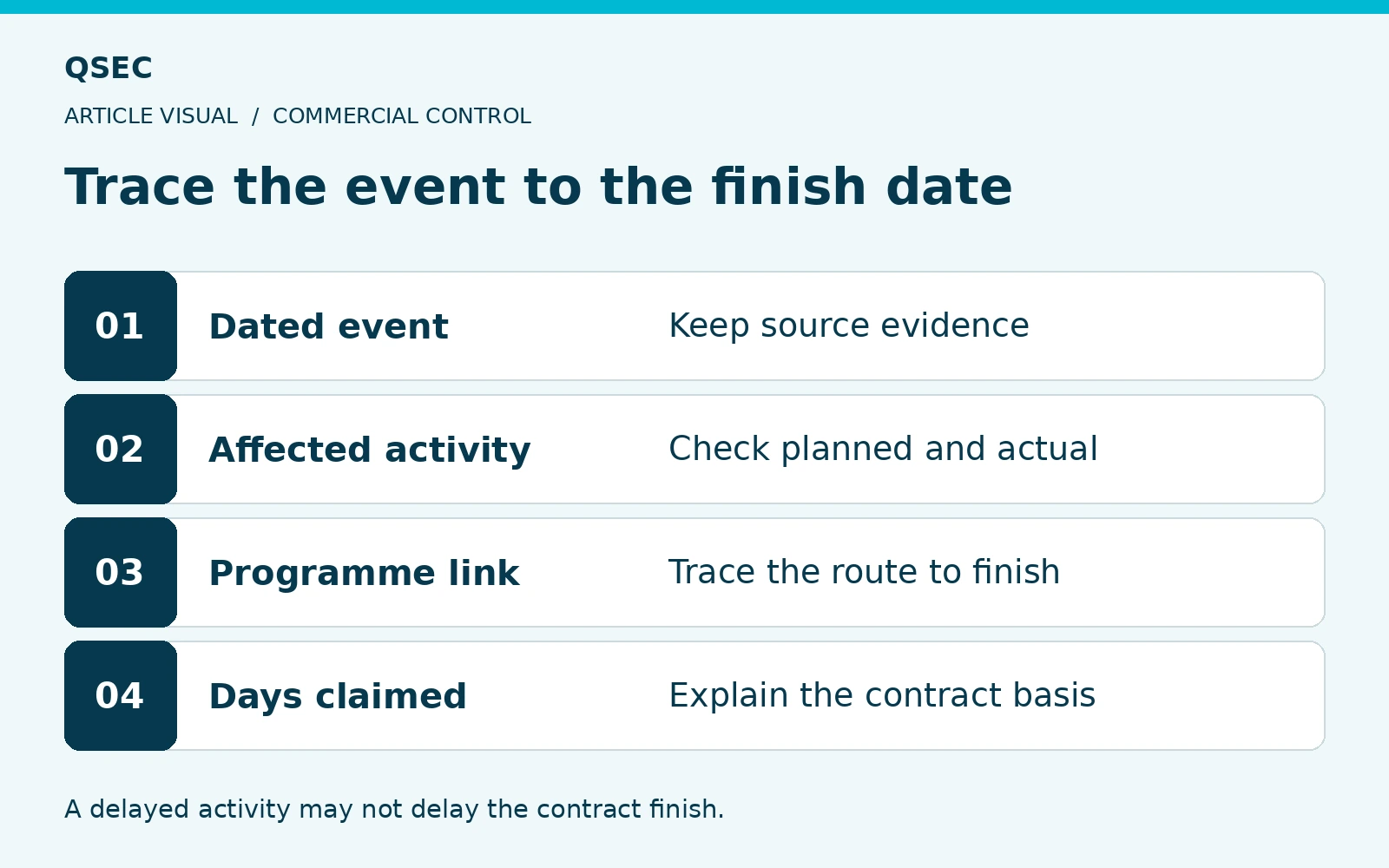
Support Your Extension Of Time Application With Records
Check which events can give more time and which notices are needed. Keep the issued notices with the site and design records from that period.
Save the baseline programme and updates. Check progress, task links, working days and key dates before using the data to assess delay.
Follow The Route To The Finish
The critical path is the chain of tasks that sets the finish date. Show whether the event delayed that chain and how the team acted.
Link orders, design queries and site notes to the dates. Check other causes, with your own delays and any overlap, instead of grouping all events into one block.
The event is clear. Can you follow its effect through the programme?
- Event
Identify the cause and applicable terms.
- Work sequence
Trace the affected tasks and constraints.
- Completion
Explain the effect on the planned finish.
Show the relevant chain of work and test the effect on the completion date.
Use The Right Review Method
The method must fit the terms, dates and files you have. Use a skilled planner or delay expert when the work needs that support.
Check that the days claimed follow from the programme review. Keep facts known at the time apart from later records, and update the case when the terms call for more detail.
General guidance. Check your signed contract and the job facts. Get legal advice where needed.