
A cost plan should become stronger as the design grows. A RIBA stage label alone does not show that the plans have enough detail to price all the work.
As the design develops, can you trace each budget movement?
Cost Planning Through RIBA Stages: Check The Design
Review the brief, floor space, systems and finishes against the plans received. Check access, site time and who designs each part.
Measure quantities where the drawings allow it. Use rates that suit this job and keep clear allowances where a choice or detail is still open.
Explain The Cost Changes
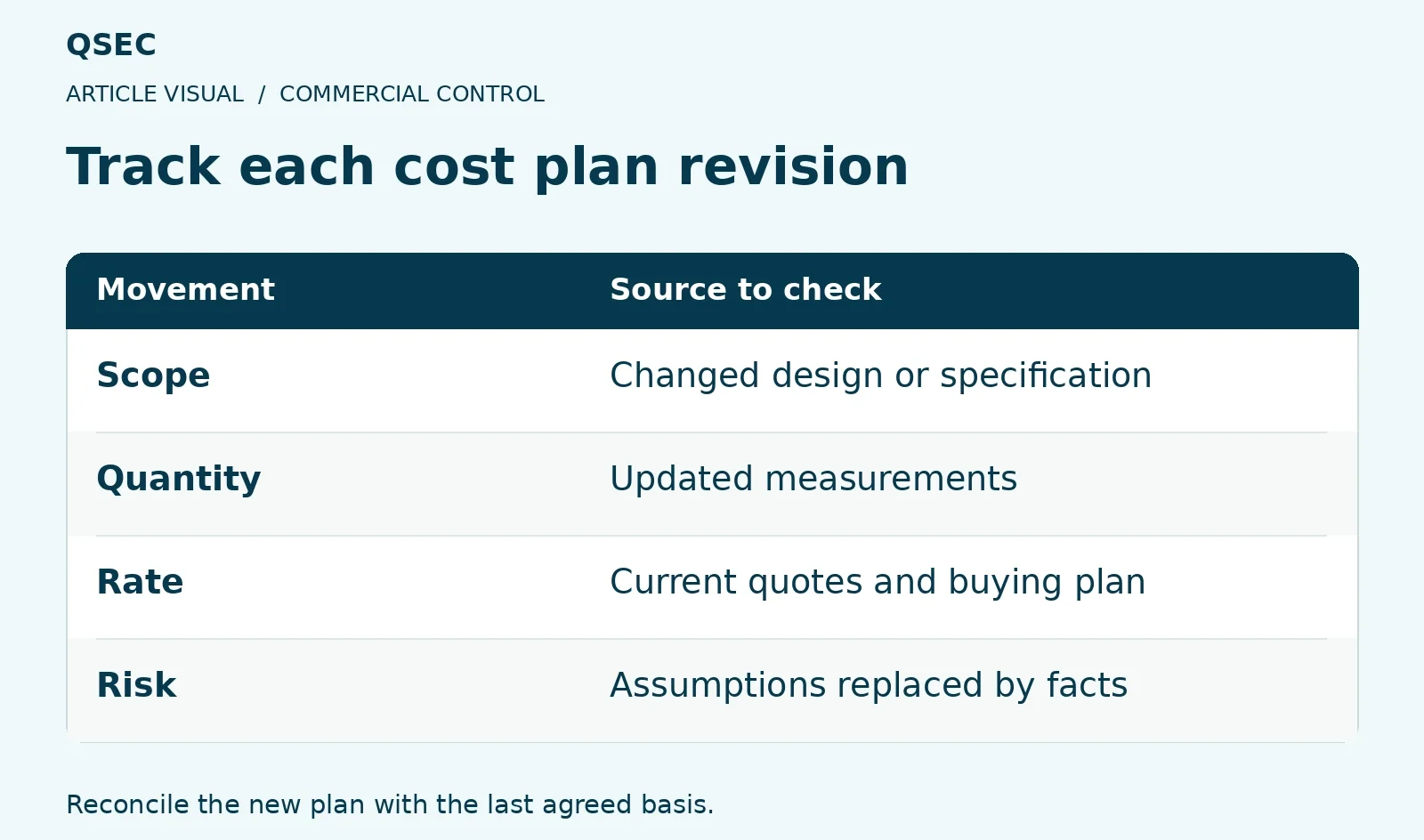
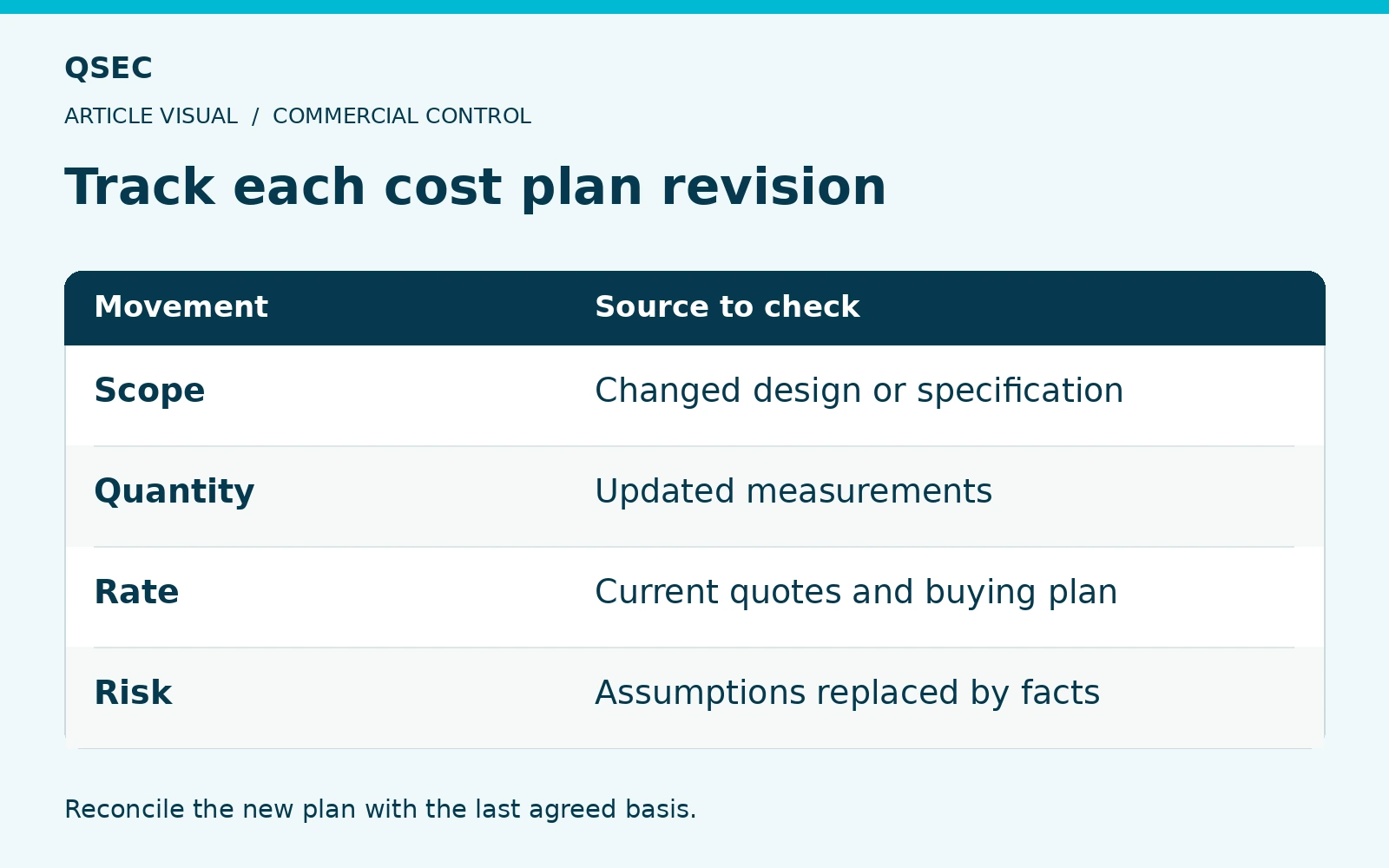
Use the same breakdown as the last agreed plan. Show whether the move came from scope, quantity, rate or risk.
Better design detail should improve the cost basis. It should also show a budget gap in time for the client and team to choose what to change.
A new total needs more than a new date. What changed underneath it?
- Scope and quantities
Identify changed work and measures.
- Rates and time
Explain new quotes and programme effects.
- Risk and allowances
Replace assumptions as facts arrive.
Keep the earlier basis and show the cause of each movement as the design becomes clearer.
Focus On The Next Choice
List facts still due, their likely cost effect and when they are needed. Give each large open choice an owner and review date.
Check the programme and buying plan too. Clearer drawings may arrive while access or lead-time risks grow. Review both before the team moves to the next stage.
General guidance. Check your signed contract and the job facts. Get legal advice where needed.