
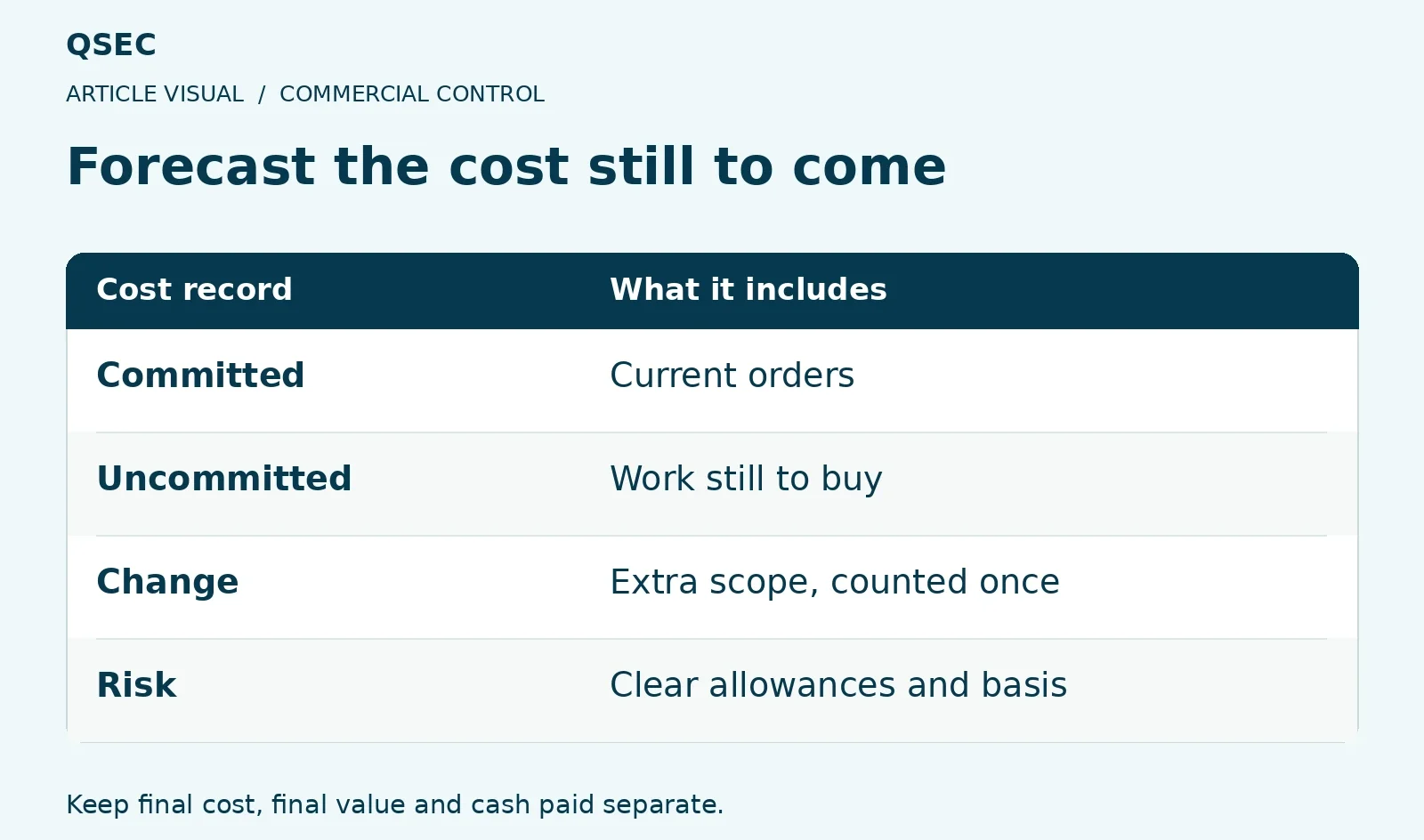
Anticipated final cost is what you expect the job to cost when all work is done. Orders placed and bills paid form part of that sum, but they do not cover everything left.
Spend to date is visible. What will the work left to finish cost?
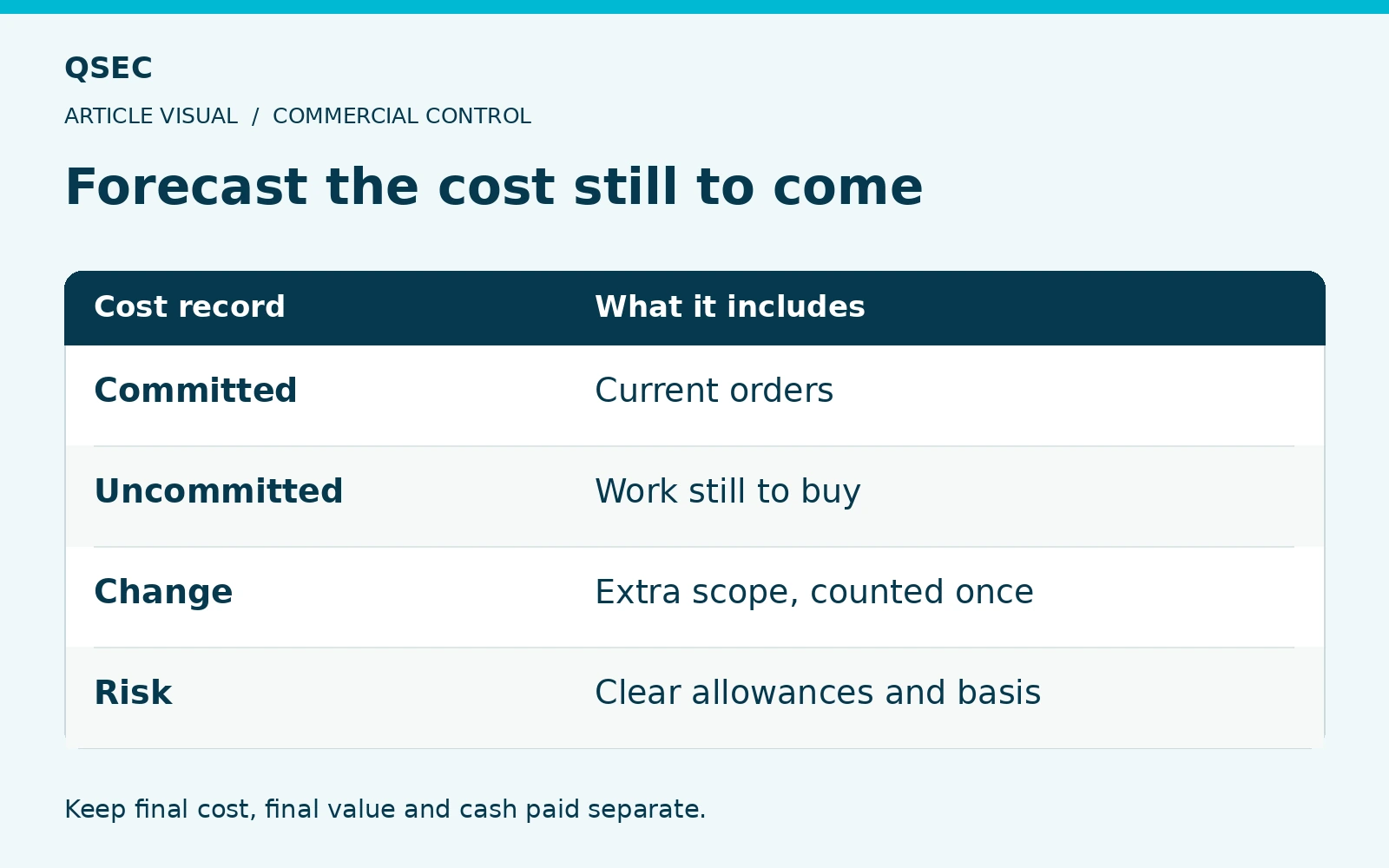
Build Your Anticipated Final Cost By Package
Start with the last agreed forecast and check it against the scope now needed. Show orders, work still to buy, extra changes and risks.
Mark which sums are firm and which are estimates. An open change can still add cost, so use a sound view rather than wait for agreement.
Explain Each Move
Show whether the cost moved due to scope, quantities, rates or time on site. State the value and the next choice needed.
Keep the same breakdown each month. Link sums to quotes or orders, and give each major gap an owner and review date.
Show any procurement saving with its quotation, expiry date and the approvals still needed before it can be achieved.
You have a forecast. Can the team tell it apart from final value and cash?
- Final cost forecast
What you expect the whole job to cost.
- Final account value
The end value agreed under the terms.
- Cash paid
The money that has actually moved.
Keep the three figures beside one another, with their own labels and source records.
Keep Cost And Cash Clear
Check that bills already in an order are not added again. Look for the same overlap in change costs and keep possible savings on their own.
The forecast is a live view of cost. The final account is the end value agreed under the terms. Cash paid is a third figure. Each needs a clear label so the team can use it.
General guidance. Check your signed contract and the job facts. Get legal advice where needed.