A clear guide to the commercial role of a quantity surveyor in controlling cost, contracts and change before, during and after construction.
The role depends on who appoints the quantity surveyor
A quantity surveyor manages and explains the commercial side of a construction project. The exact duties depend on whether the appointment is for an employer, developer, contractor, subcontractor, funder or public body, and on the procurement route and project stage.
An employer-side quantity surveyor may focus on feasibility, budgets, tendering, valuations and cost assurance. A contractor-side quantity surveyor is more likely to manage applications, subcontract accounts, cost-value reconciliation, change and contractual entitlement. The underlying discipline is the same: connect scope, quantity, price, contract and evidence.
- Define the decision or commercial risk
- Confirm the contract and available information
- Agree deliverables, dates and reliance
- Keep a clear record of assumptions and movement
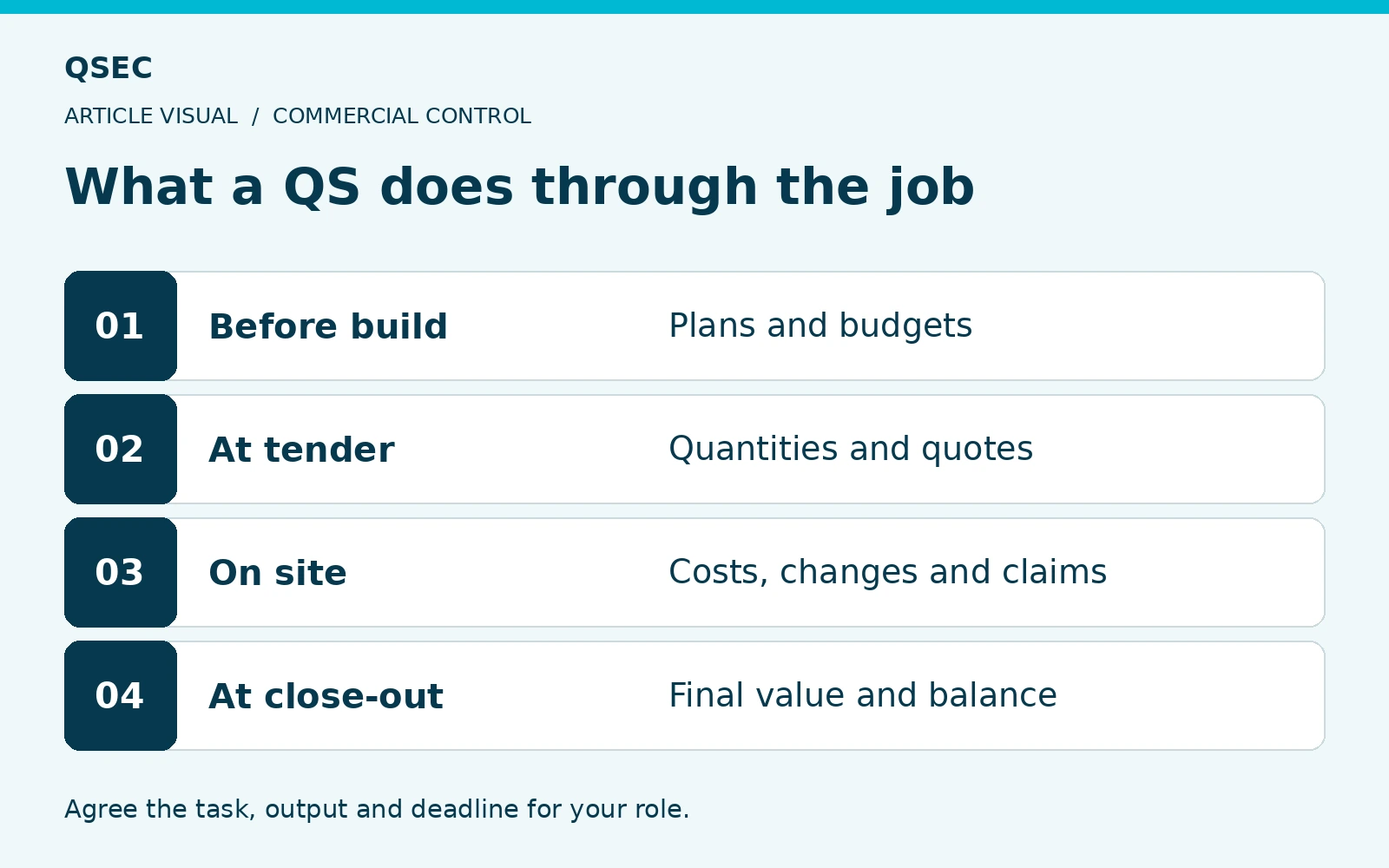
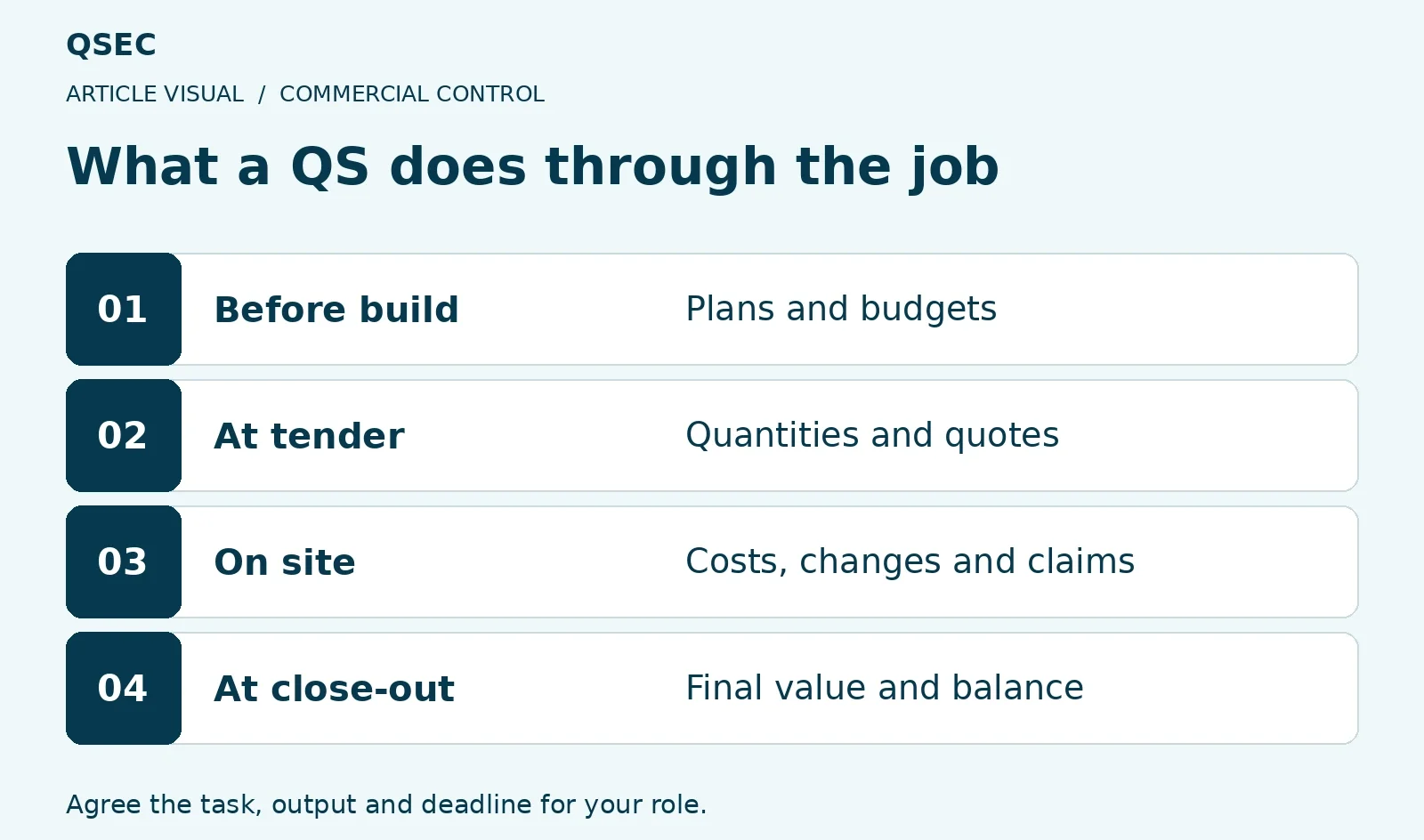
Before construction
A quantity surveyor can test feasibility, prepare cost plans, advise on procurement, develop pricing documents and compare tender returns. The work helps the team understand what is included, what remains uncertain and how the budget should be controlled.
At an early stage the surveyor converts the brief and design into an elemental cost model. As information develops, quantities, specifications and market evidence replace allowances. Options can be compared on a consistent basis, including their effect on risk, programme and future operation.
- Feasibility and cost planning
- Measurement and estimating
- Procurement advice
- Tender analysis and recommendation
During construction
The role typically includes valuation, payment, forecasting, change control, contract support and reporting. On the contractor side it can also include applications, supply-chain management, cost-value reconciliation and protection of contractual entitlement.
A useful monthly report does more than record money already spent. It reconciles the approved baseline, commitments, assessed change, forecast change, risk and opportunity to an anticipated final position. The narrative explains movement and identifies the decisions needed before the next report.
Good change control follows an event from instruction or cause through entitlement, measurement, valuation and agreement. Keeping that route visible helps the project team address issues while records and responsible people are still available.
- Applications, valuations and payment notices
- Cost reporting and cash-flow forecasting
- Variations, compensation events and records
- Subcontract procurement and account management
At completion
Commercial close-out involves reconciling changes, retention, claims, outstanding information and the final account. A well-maintained record throughout the project makes this process faster and more defensible.
The quantity surveyor should be able to explain the movement from the original sum to the final account, identify unresolved items and record the agreed settlement. Closing subcontract accounts and retention in parallel prevents commercial exposure from remaining after practical completion.
- Final measurement and change reconciliation
- Loss and expense or delay assessment
- Retention and outstanding payment
- Agreement and close-out record
What to include in a quantity surveying brief
A clear enquiry should state the project type, location, stage, procurement route, estimated value or scale, available information and immediate deadline. It should also explain whether the requirement is a complete service, an independent review or additional capacity for an existing team.
Ask the consultant to confirm scope, exclusions, deliverables, programme, fee basis and who may rely on the advice. This makes proposals easier to compare and reduces gaps after appointment.
Practical next step
Before acting, check the signed contract, current project information, relevant dates and contemporaneous records. If the position affects payment, programme or entitlement, a focused review can identify the evidence, decision and immediate action required.
Related QSEC services
Continue with quantity surveying and cost management, construction estimating and tender support and commercial management, or discuss the project with QSEC.