Independent quantity surveying and estimating consultants

Shrewsbury, supporting projects across the UK 01743 403120 info@qsconsultants.co.uk

QSEC insight

A Practical Construction Cost Reporting Checklist

The minimum information a useful cost report should explain, from baseline and commitments to risk and decisions.

The minimum information a useful cost report should explain, from baseline and commitments to risk and decisions.

Start with the purpose and audience

A cost report should help someone make a decision. Before choosing the format, identify the reporting date, contract basis, approved budget, intended readers and the approvals they control. A board report, contractor cost-value reconciliation and funder report may use related data but should not be treated as interchangeable.

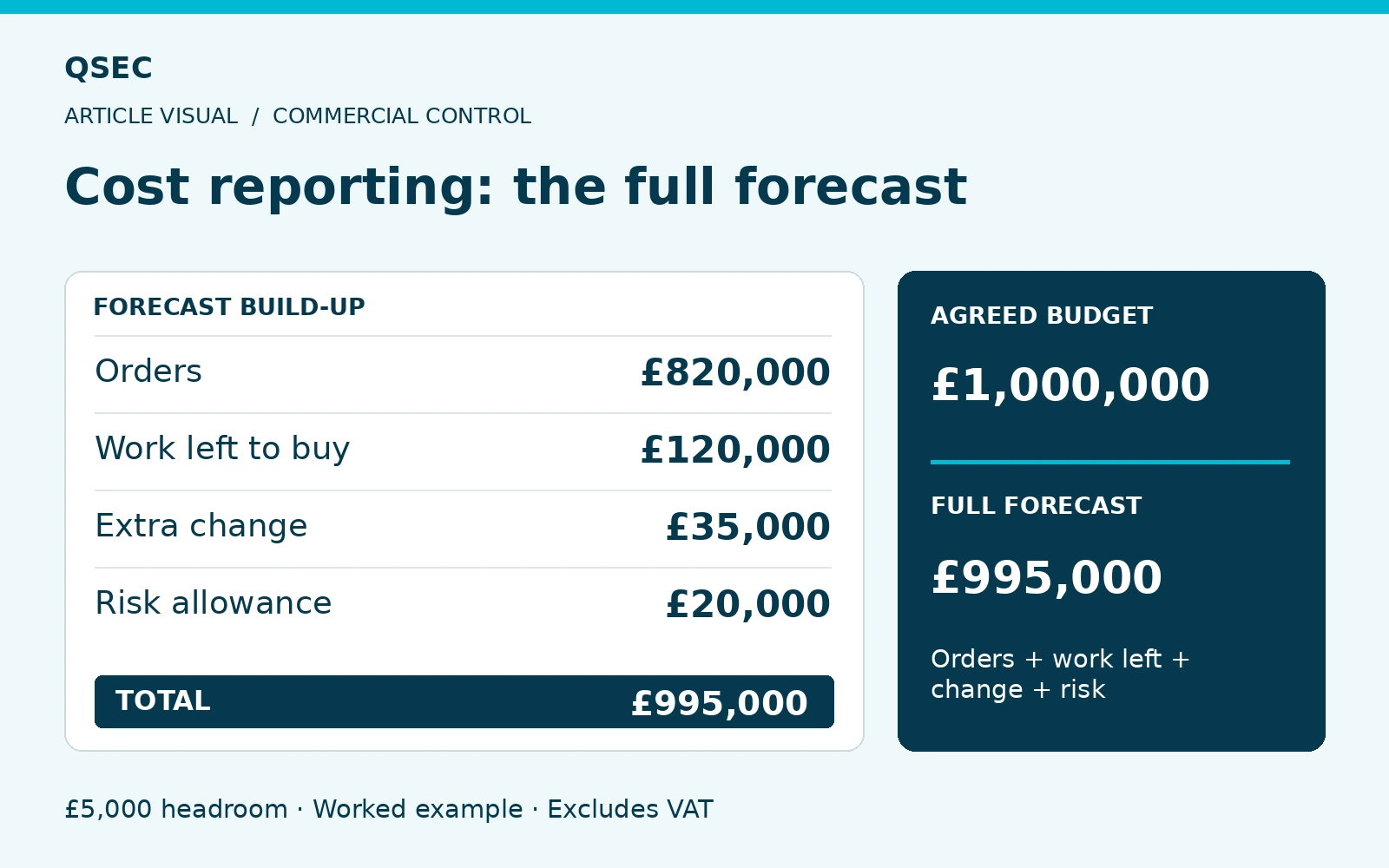
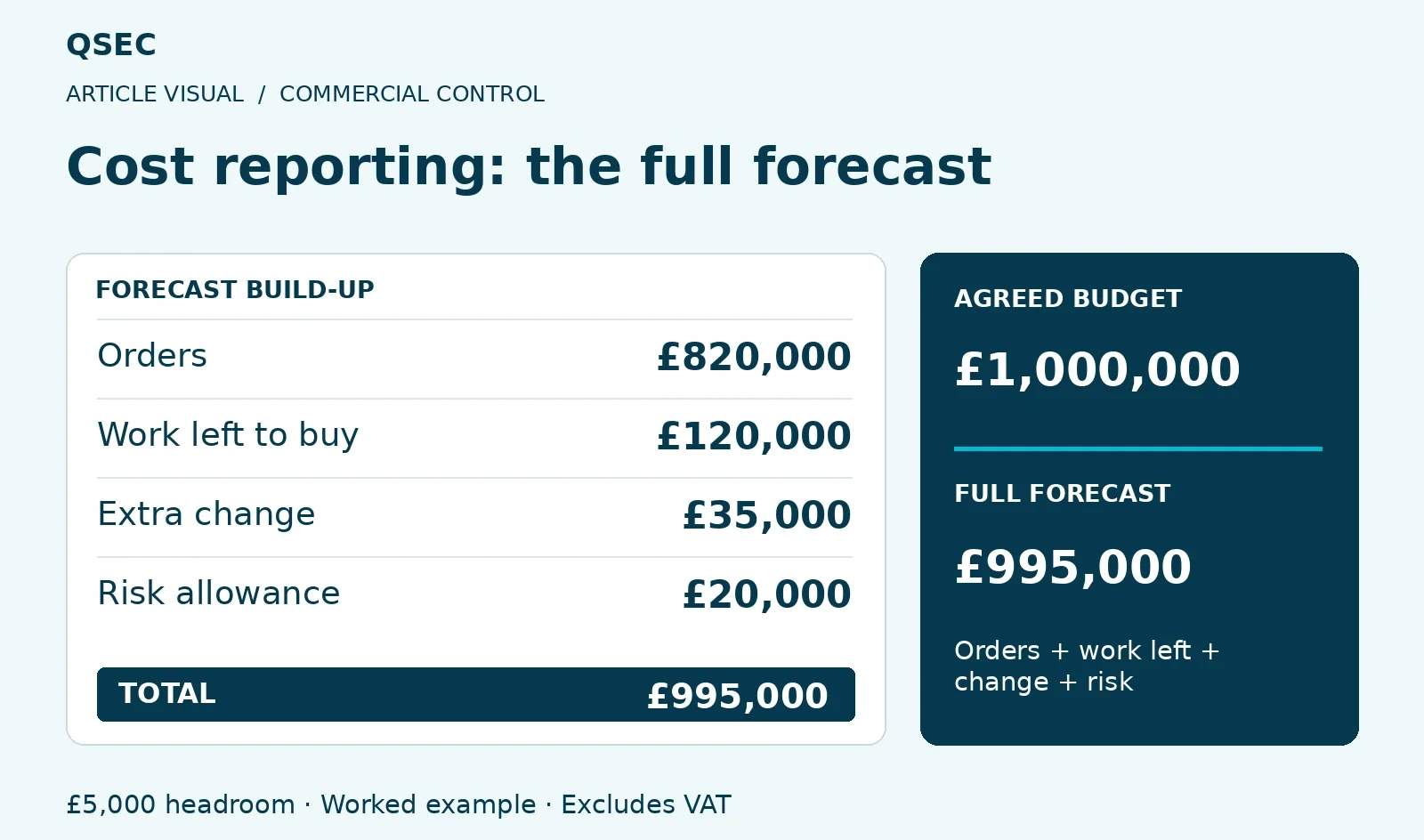
Use one clearly defined anticipated final cost and show how it has been formed. If the project team maintains different internal and client forecasts, explain the purpose and reconciliation rather than allowing two unexplained totals to circulate.

  • Name the reporting period and data cut-off
  • State whether figures include VAT and inflation
  • Identify the approved baseline and authority
  • Use consistent package and change references

A report should reconcile to an approved baseline

The reader should be able to see the original or approved budget, approved transfers, committed cost, assessed change, forecast change, risk and the resulting anticipated final position.

Show every authorised movement to the baseline separately. Budget transfers, scope omissions and contingency drawdown should have an approval reference and date. Without that record, an apparent saving in one package can conceal a transfer or omission elsewhere.

  • State the reporting date and contract basis
  • Separate approved and unapproved change
  • Explain contingency movement
  • Identify decisions needed before the next report

Separate commitments, change and remaining forecast

Committed cost should reconcile to executed orders, contracts or other agreed commitments. Pending procurement, provisional sums and remaining allowances belong in the forecast, with a clear basis and owner.

Change should be separated into approved, instructed but not agreed, notified, potential and rejected items where that distinction is useful. Record both the current assessment and the submitted value so the exposure and negotiation gap are visible.

  • Original and revised commitments
  • Approved and unapproved change
  • Forecast to complete each package
  • Risk, opportunity and contingency

Explain risk and confidence

A risk allowance is more useful when the report identifies the event, probability or basis, potential cost, owner and next review date. Avoid using contingency as a balancing figure that automatically absorbs every adverse movement.

Where design or market information is incomplete, describe the confidence of the forecast and what will improve it. This allows decision-makers to distinguish a firm commitment from an early allowance even when both appear in the same total.

  • Link each material risk to an action
  • Avoid double counting risk within package forecasts
  • Show contingency use and balance
  • Record opportunities separately until supported

Narrative matters

Numbers alone do not explain why the position has moved. A concise narrative should identify the principal movements, the evidence supporting them, the owner of each action and the date by which a decision is required.

Lead with material movement rather than repeating every line in the spreadsheet. Explain what changed since the previous report, why it changed, the effect on budget and programme, and whether the movement is approved, recoverable or still uncertain.

  • Top movements since the last report
  • Decisions and approvals required
  • Overdue commercial actions
  • Forecast milestones before the next report

Complete a final quality check

Before issue, reconcile the report to the source ledgers and change register, check formulas and confirm that narrative and figures describe the same position. Version the report and retain the supporting data so later movement can be audited.

A short review meeting should end with named actions and dates. Update the action record alongside the next reporting cycle; otherwise the same uncertainty can be carried forward without resolution.

Practical next step

Before acting, check the signed contract, current project information, relevant dates and contemporaneous records. If the position affects payment, programme or entitlement, a focused review can identify the evidence, decision and immediate action required.

Related QSEC services

Continue with quantity surveying and cost management, commercial management and value engineering and cost assurance, or discuss the project with QSEC.

General guidance This article is not project-specific contractual or legal advice. Review the signed contract and facts before acting.

Need a clearer commercial position on your project?

Discuss the requirement