
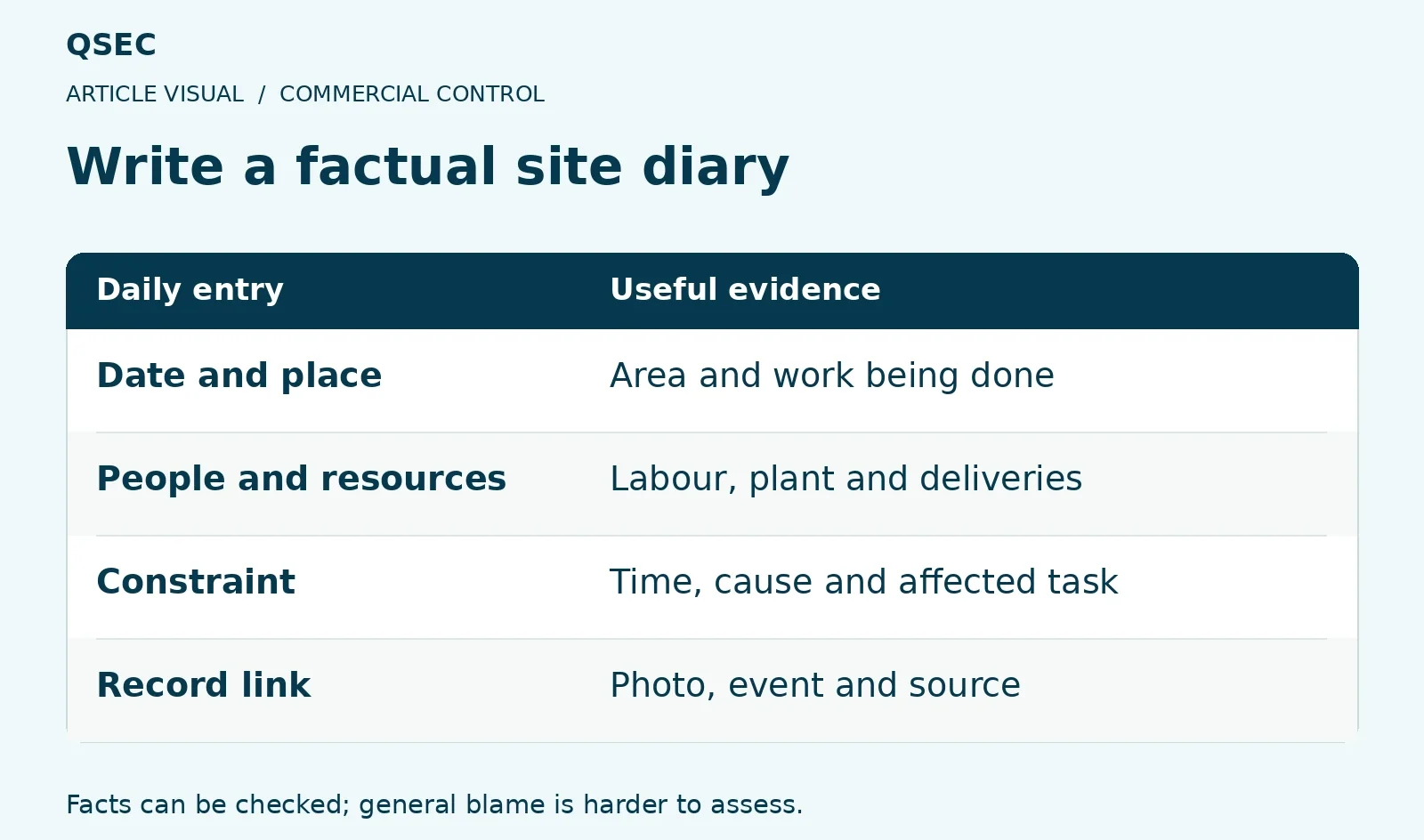
A subcontractor site diary should show what happened, where and when. Record the work, hours and facts you can check, so the team can trace the cause of a delay.
If access is blocked today, what would tomorrow’s reader need to know?
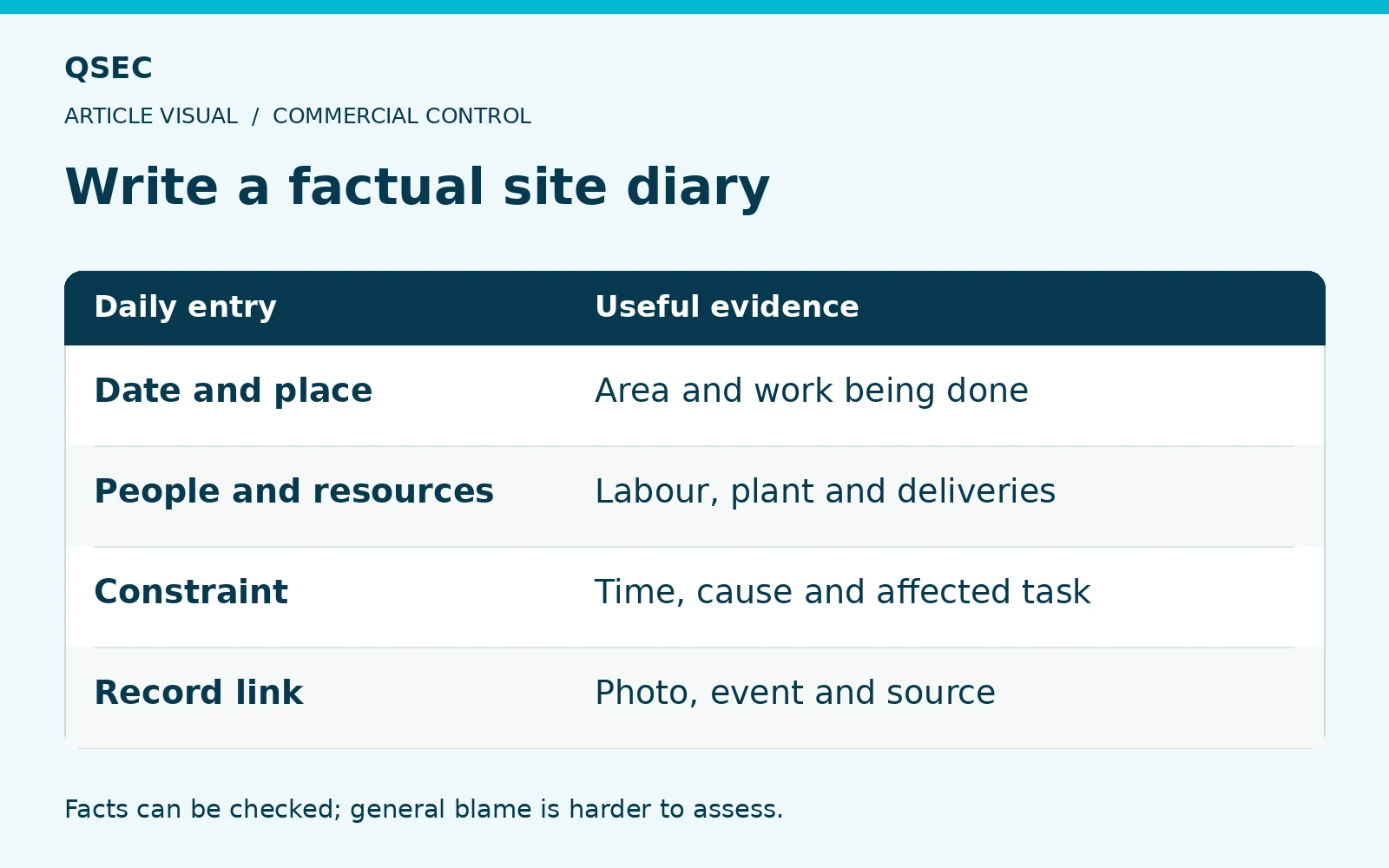
What To Record In Your Subcontractor Site Diary
State the job, date, author and work hours. Use room, floor or grid codes for the work location.
Record output, labour and plant. Link timesheets, photos and goods received. Note instructions and how the work differed from the plan.
Describe The Constraint
For example, access to rooms 12 and 13 was blocked at 08:00. Four workers moved to corridor C at 09:15. Access was restored at 13:30.
This shows how to record the event. Use facts from the job and mark what you saw and what someone told you.
The diary says work was delayed. Does it show the time, place and response?
- Where and when
Identify the rooms, times and author.
- Resources and output
Record people, plant and work completed.
- Event and response
Show the constraint and what the team did.
Use observed facts and linked source records, then raise any notice through the required route.
Keep The Trail And Act
Link photos to their date, place and event. Keep source files and record why a diary entry was later changed.
The diary does not itself agree a price or serve a notice. Raise urgent points through the contract route and name who will follow them up.
Check privacy requirements for photographs and retain source files when preparing the record for commercial assessment.
General guidance. Check your signed contract and the job facts. Get legal advice where needed.