
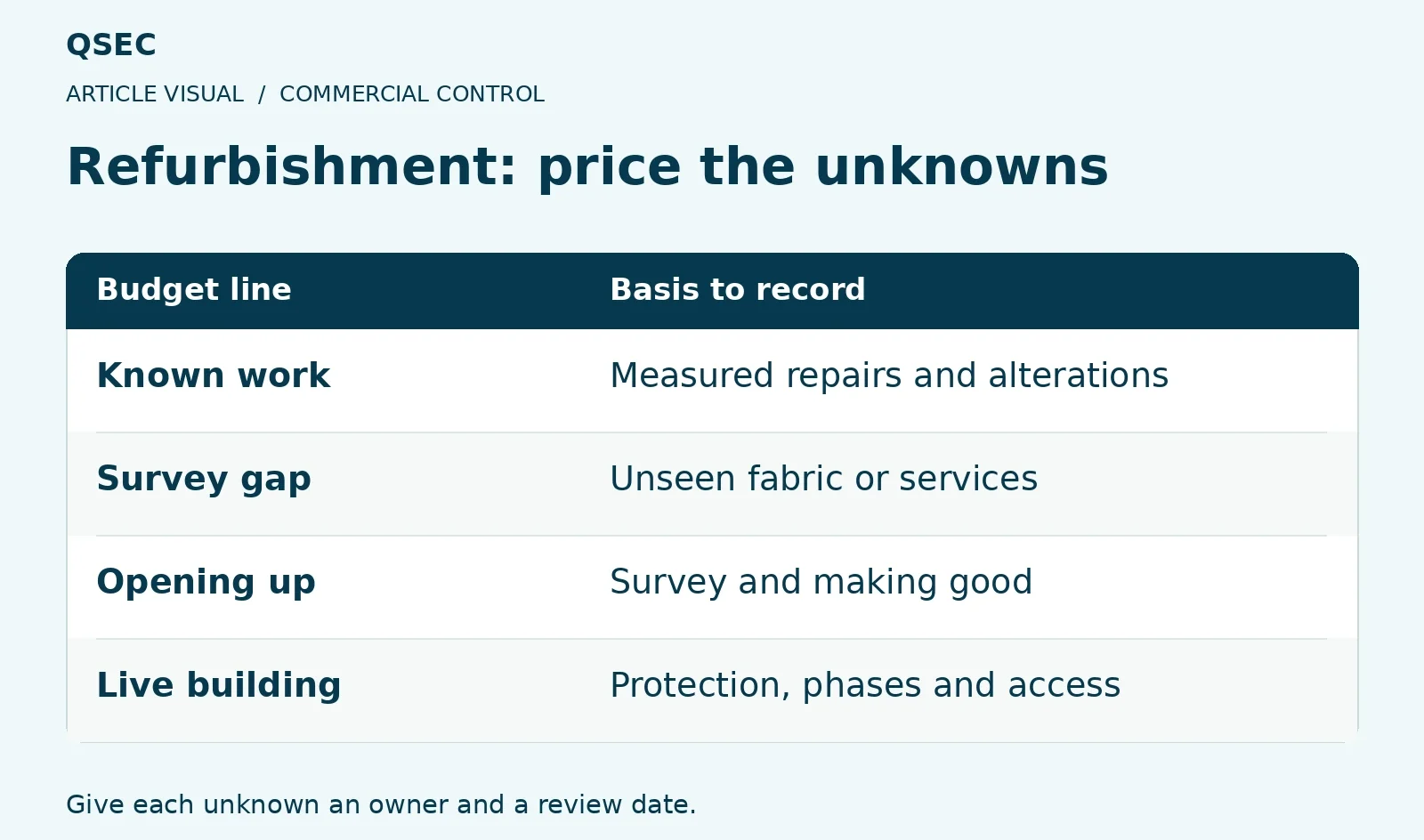
An old building can hide work that is not shown on the plans. A sound refurbishment budget shows what has been checked, what remains unknown and how the work will be done.
What could the survey reveal after your refurbishment price is fixed?
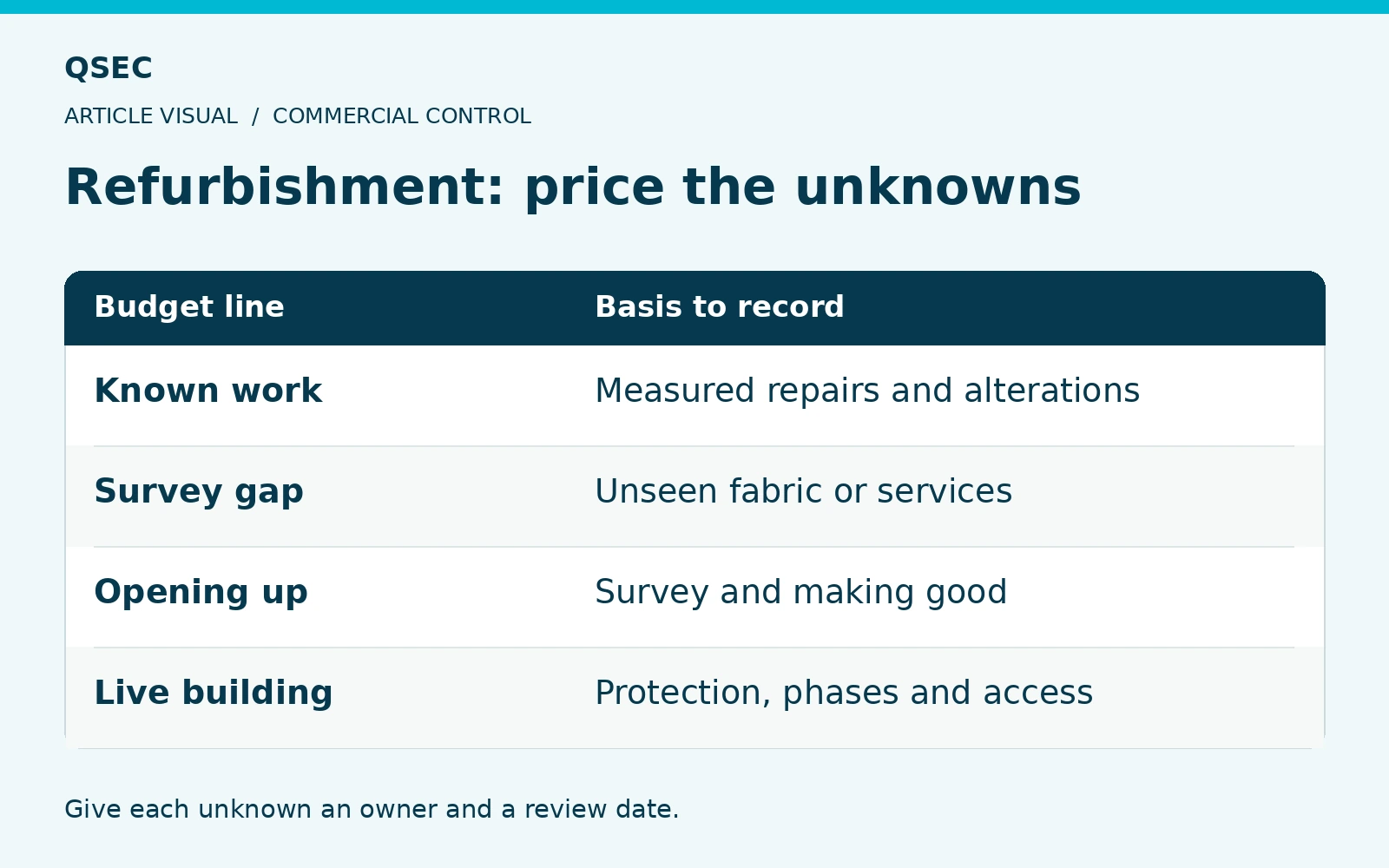
Start Refurbishment Cost Planning With A Survey
Check the surveys and the rooms they cover. List spaces no one has seen and get the right advice on asbestos, live services and the state of the fabric.
Allow for surveys, opening up and making good. A broad rate may help at first, but it should not make hidden work look fully measured.
Make Each Allowance Clear
Show what each allowance covers and which facts are still needed. Name who will arrange the check and when the cost can be firmed up.
Keep known repairs apart from risk. When new facts arrive, update the price and show why it changed from the last plan.
An allowance needs a reason. Which unknown could change the scope or site time?
- Known work
Measure the scope that is already defined.
- Survey gaps
State what has not been seen or tested.
- Live site
Allow for access, protection and repeat visits.
Give the unknowns a survey or review action, then move confirmed work into the scope price.
Allow For Work In A Live Building
Check access, work hours, noise limits and shutdowns with the site team. Price phases, repeat visits, protection and temporary power or water where needed.
Two rooms may look alike but need different work. Check the basis before using one rate for both. A tender can pass a risk to another party, but that risk still needs to be priced and managed.
General guidance. Check your signed contract and the job facts. Get legal advice where needed.