
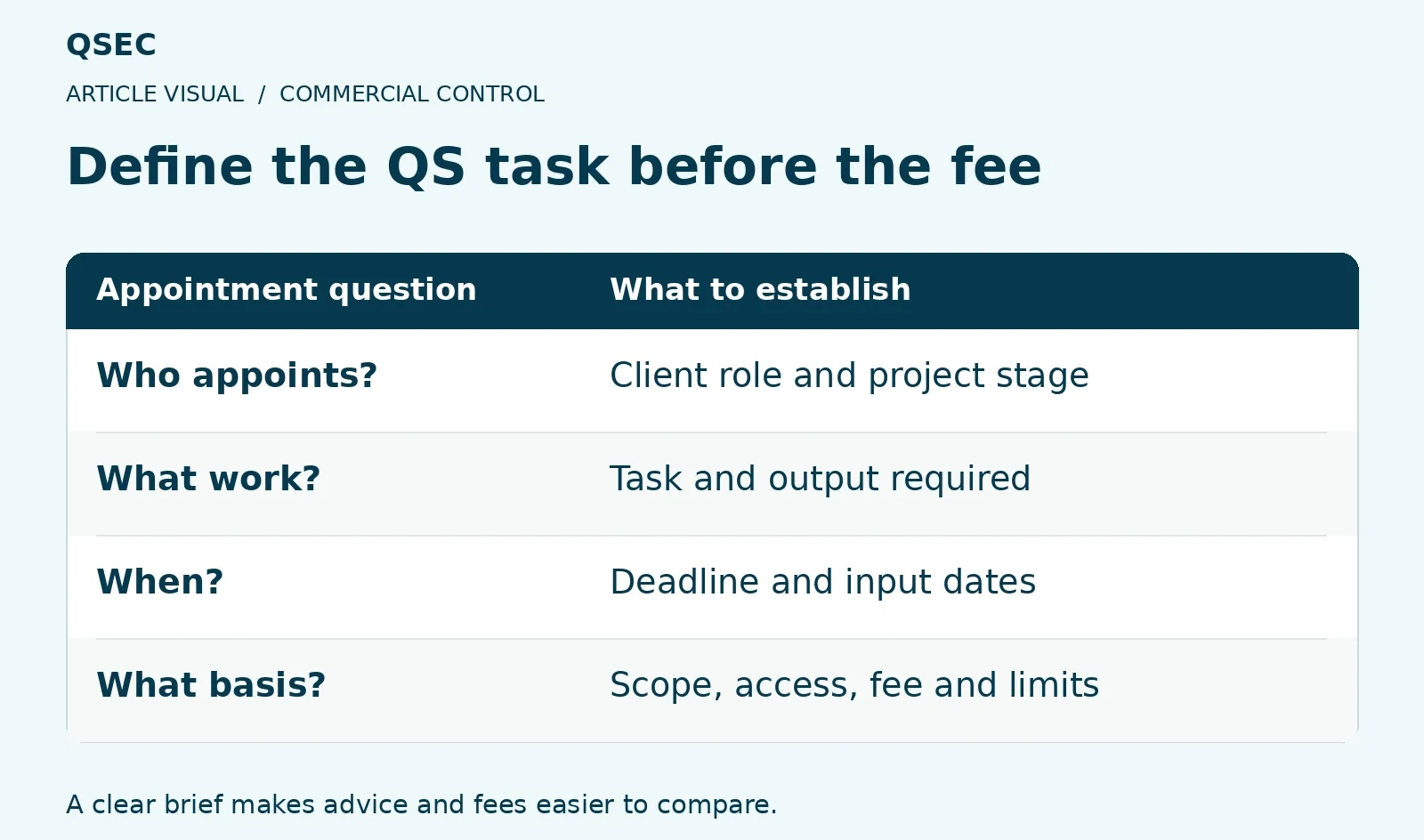
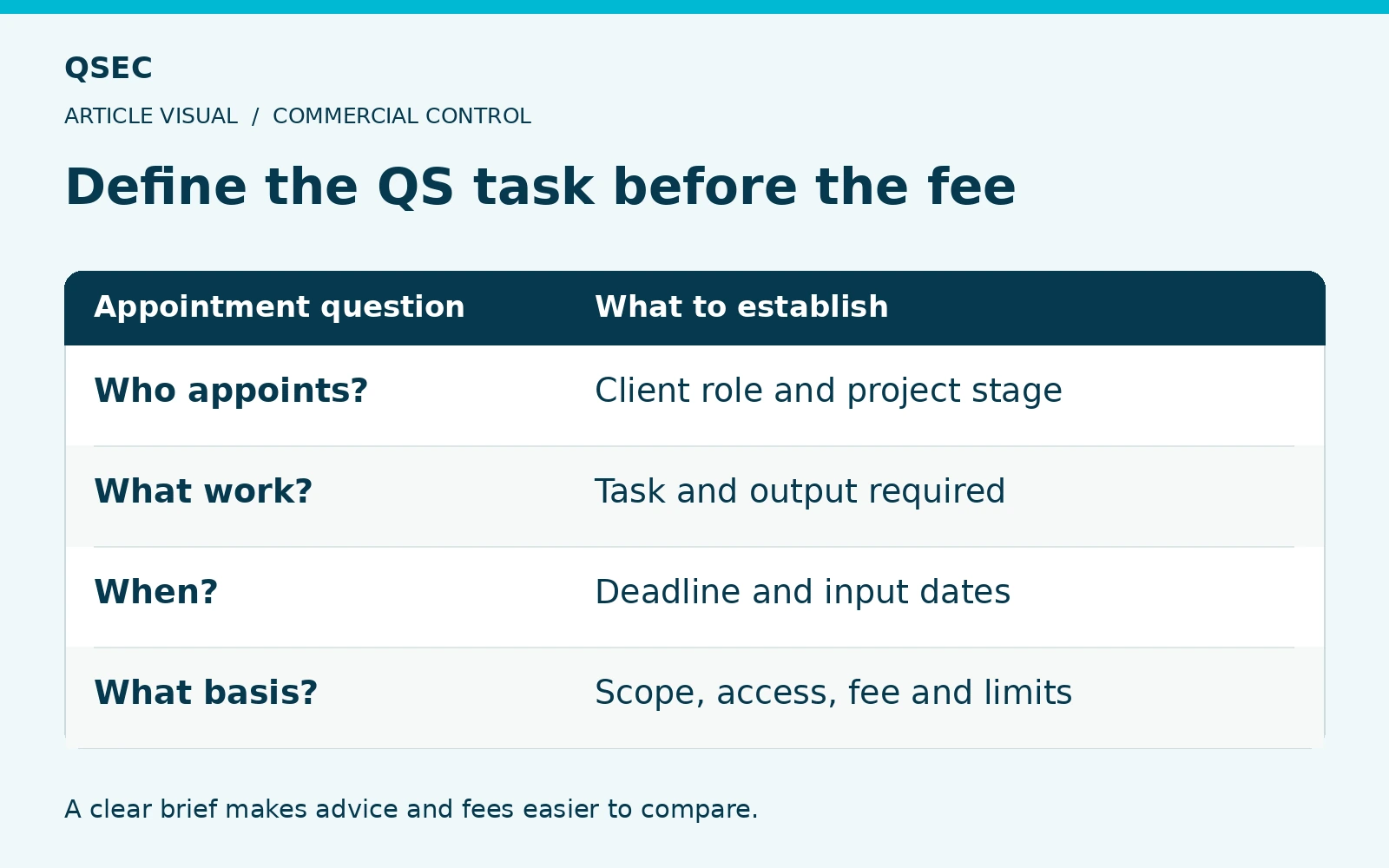
A QS role depends on who appoints them and the choice the team needs to make. Agree the task first so fees and outputs can be judged on a clear basis.
Which QS role and output would help with your next decision?
Quantity Surveyor FAQs: What Can A QS Do?
For a client, the work may cover budgets, cost plans and bid reviews. For a contractor, it may cover estimates, trade accounts, claims, changes and forecasts.
Agree the exact outputs and exclusions. A job title does not prove that every one of those tasks is included.
When And Where Can They Help?
Early advice leaves more room to test choices before they are fixed. A QS can join a live job too, with deadlines and file gaps clearly stated.
Much pricing and report work can be remote. Agree visits and travel costs where site checks are needed.
The title tells you little on its own. What should this appointment cover?
- Stage
Budget, tender, live work or closeout.
- Output
State the decision the advice must support.
- Scope
Agree duties, records, deadline and fee.
Use the project stage and required output to define the scope and identify any other expertise needed.
How Should Fees And Advice Be Compared?
Check scope, people, dates and inputs for a fixed fee or time charge. Show extra work and travel on the same basis.
A QS can explain cost and commercial records. Use the right legal, tax or design expert for questions outside that scope.
What Should I Send First?
Send the brief, site, stage, role and next deadline. Add an index of current plans, terms and cost files.
Agree safe file access and record the scope, fee, output and sign-off roles before work starts.
General guidance. Check your signed contract and the job facts. Get legal advice where needed.