
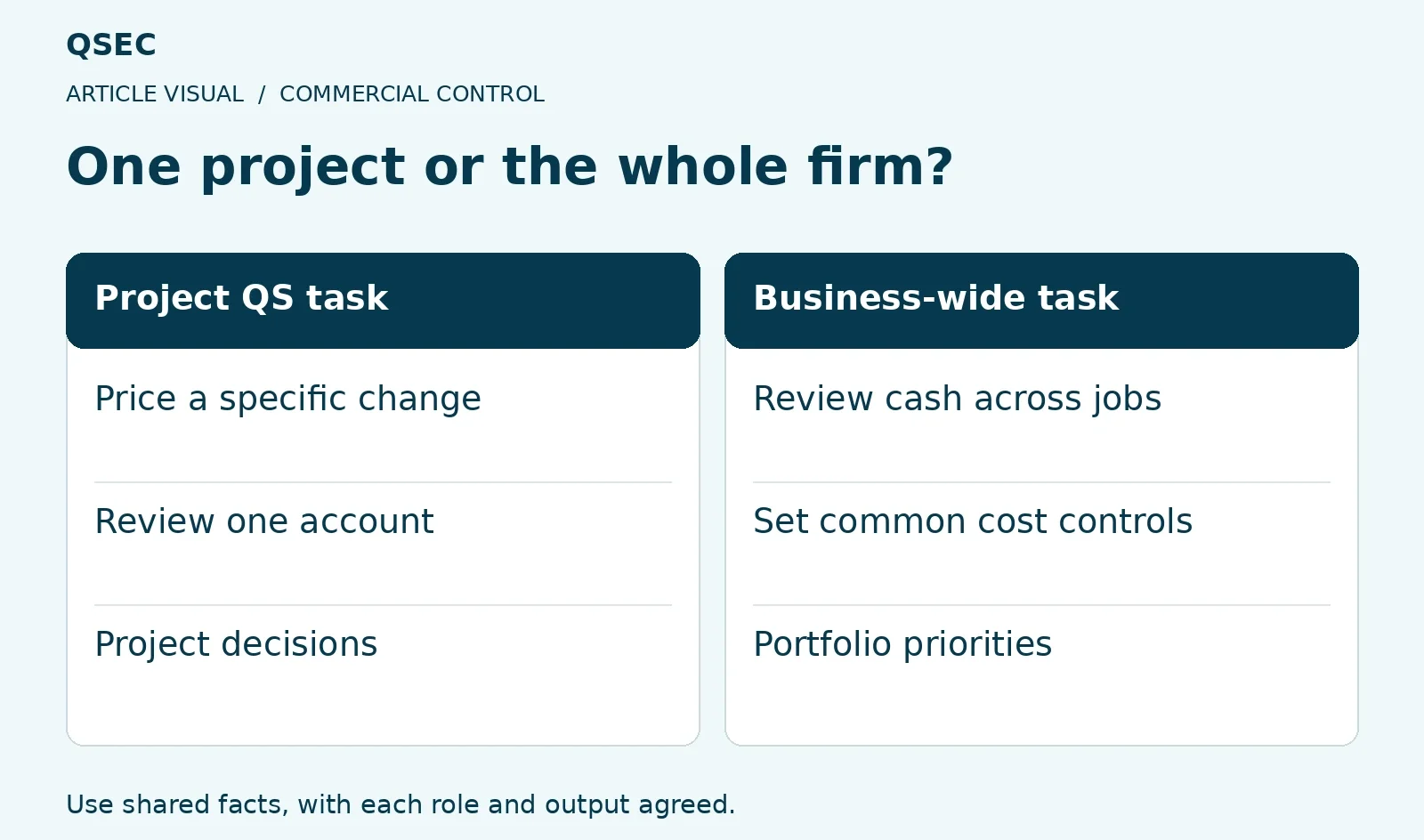
One job may need a change priced while the firm needs a view of cash across several jobs. Those tasks can share records, but they serve different choices and need a clear scope.
Can a firm-level total be traced back to the jobs behind it?
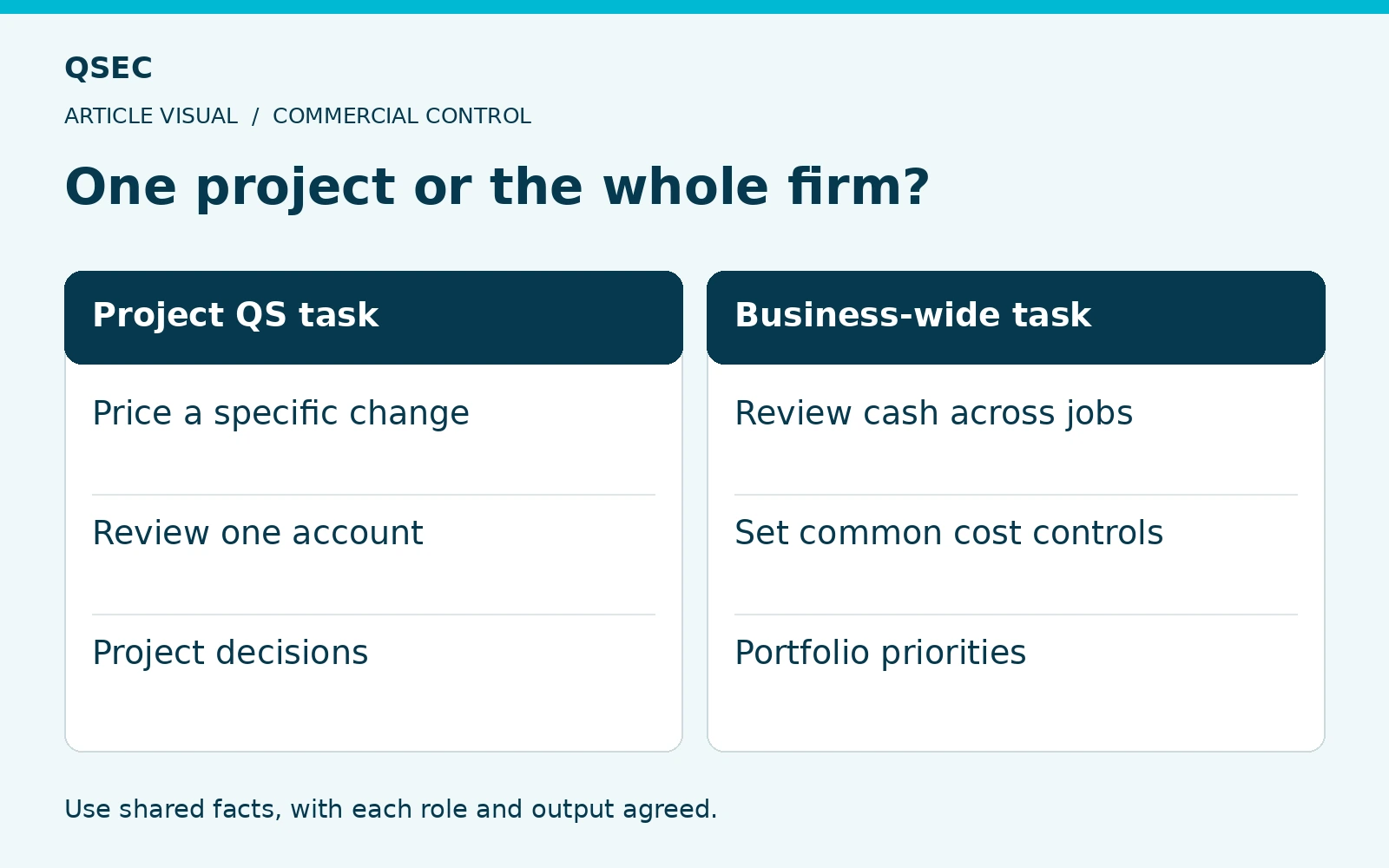
Project QS Vs Commercial Management: Define The Gap
Project QS work can cover buying, claims, changes and cost to finish. Wider commercial management links the jobs to cash, workload and risk.
Check what site, finance and directors already do. Is the gap a task, a report or a person with the right to act?
Use One Set Of Facts
The board view should trace to job records rather than create a second account. Keep open items and their pricing basis visible.
For example, £40,000 of open changes on one job needs to sit beside cash needs on others. The figure shows the idea, rather than a QSEC project result.
The project report is detailed. What does the business need to decide from it?
- Project facts
Check cost to finish and change status.
- Portfolio view
Compare jobs using consistent labels.
- Firm decision
Act on capacity, margin and cash needs.
Keep the project detail linked to the portfolio view so cost and cash decisions use the same facts.
Keep Each Role Clear
One person may cover both levels in a small firm. Keep the job detail and wider report clear so each is useful.
Name who supplies files, prepares the view and approves choices. A wider review should help project teams act without doing their work twice.
Agree what the report will be used for and who needs to read it.
General guidance. Check your signed contract and the job facts. Get legal advice where needed.