
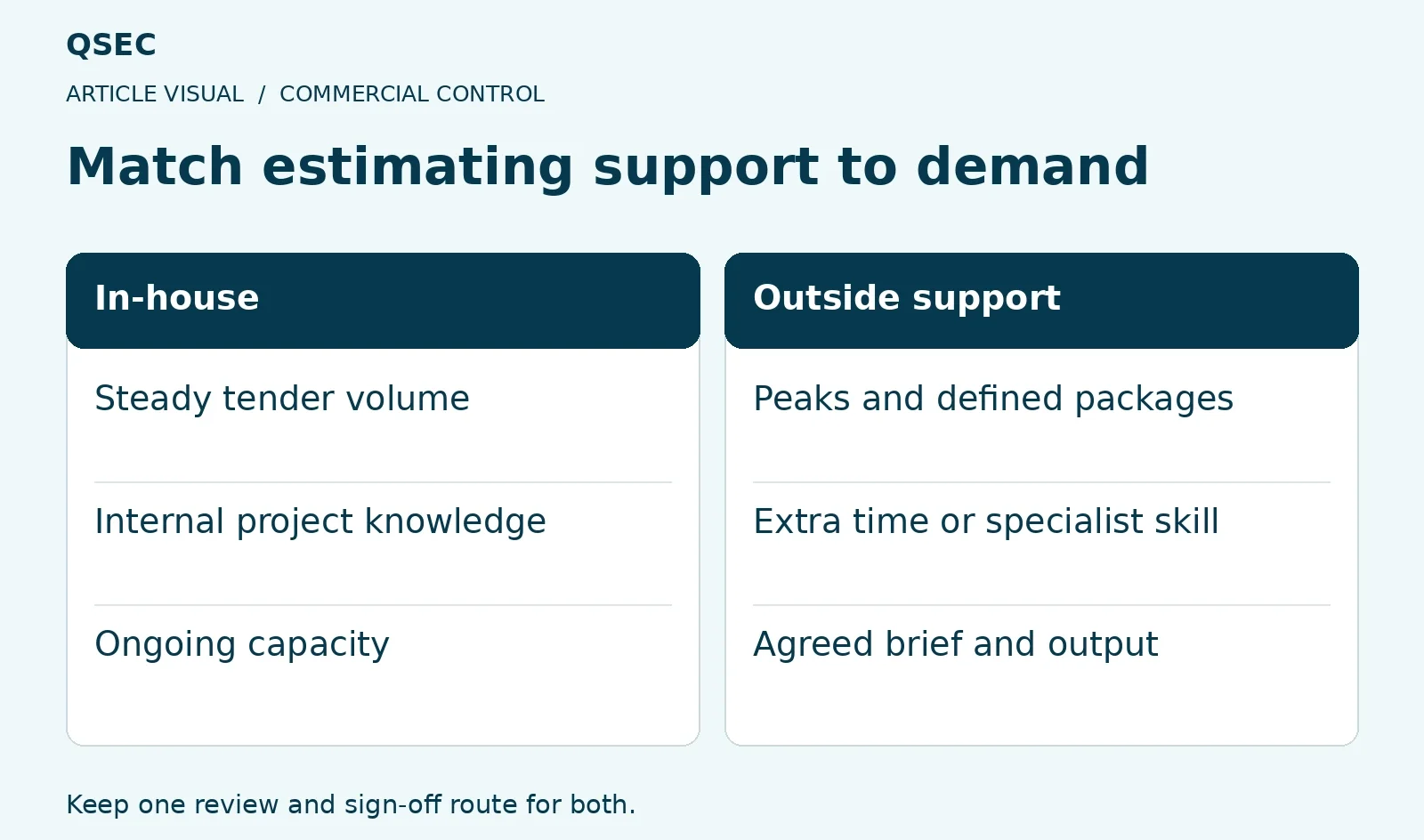
The choice between an in-house estimator and outside support starts with the work you need covered. A salary and a quoted fee alone do not show which route gives better value.
Is your estimating pressure steady, seasonal or tied to one difficult package?
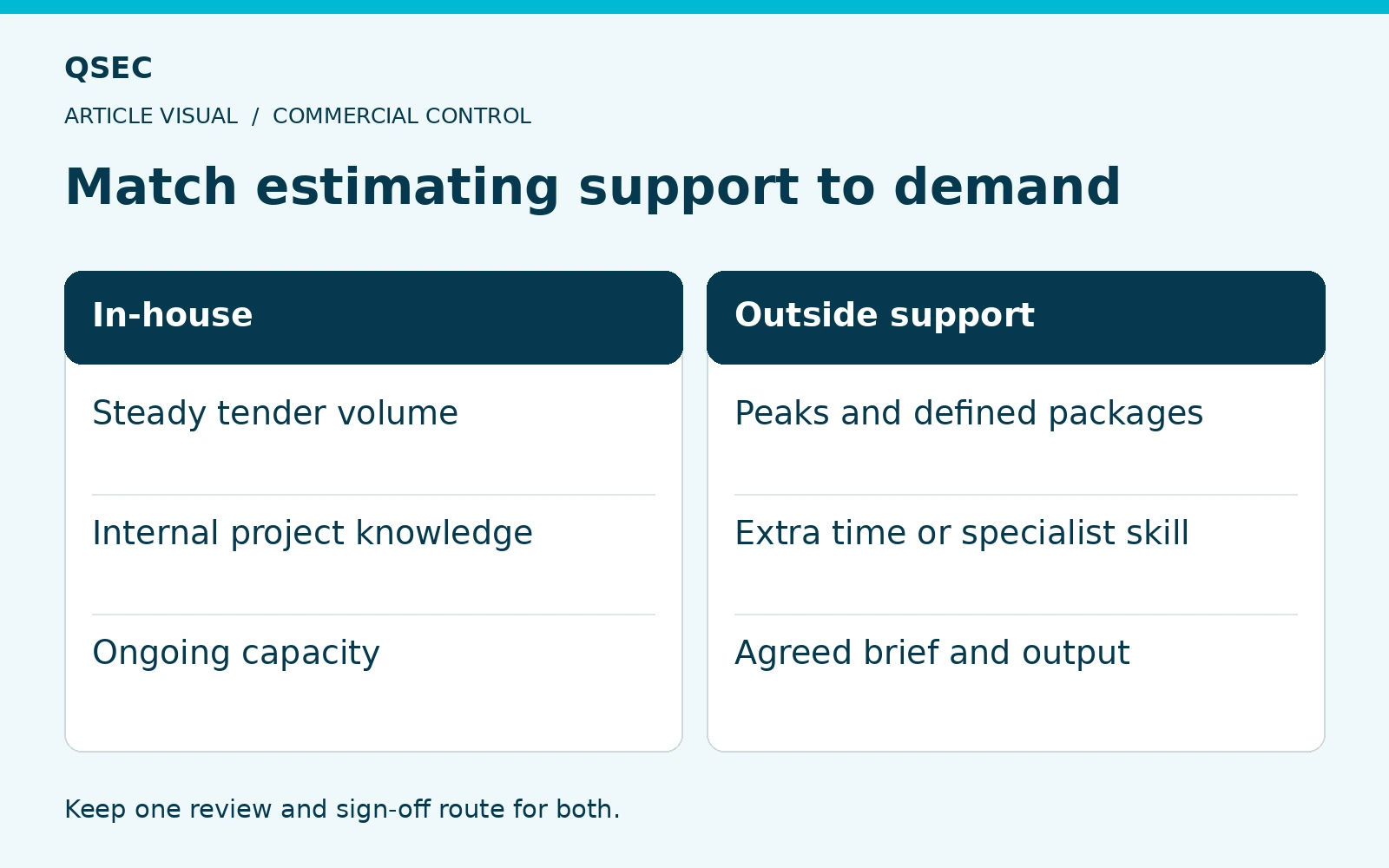
Outsourced Estimator Vs In-House Estimator: Check Workload
List routine work, busy periods and tender dates. Note the trade knowledge needed and the time your team must keep for checking bids.
Compare full staff costs with a clear scope of outside work. Include software, setup and management time so both options are judged fairly.
Keep The Brief And Sign-off Clear
Define the pack, work to price, output format and due date. Agree who measures, prices, checks and sends the bid.
Your team still needs to choose its offer and accept the risks. Check conflicts, file access and data terms before sharing live tender records.
The fee is one part of the choice. Which workload are you trying to cover?
- Steady work
Check the full cost of a regular role.
- Tender peaks
Plan support around bids and deadlines.
- Specialist task
Agree a focused output and review point.
Use a defined package to test quality, briefing effort and handover before expanding the support.
Test Support On A Defined Task
A measured package or tender review can help you judge the quality of the work. Check whether rates and quantities trace to sources and whether the files can be used by the site team.
A mixed approach may suit changing demand. Keep the core role in-house and bring in scoped help when several bids or a specialist package stretch the team.
General guidance. Check your signed contract and the job facts. Get legal advice where needed.