
A late finish does not mean all extra site costs can be claimed. A loss and expense case needs the right contract route and records showing the cost caused by the event.
Which costs arose from the event, and which belonged to the job anyway?
Loss And Expense Claim Records: Start With The Contract
Check which event may give a right to money and what notice is needed. More time and more money can have different tests.
Keep the tender programme and planned staff, plant and site costs. They help compare what should have happened with the work and costs that followed.
Trace Costs By Task And Date
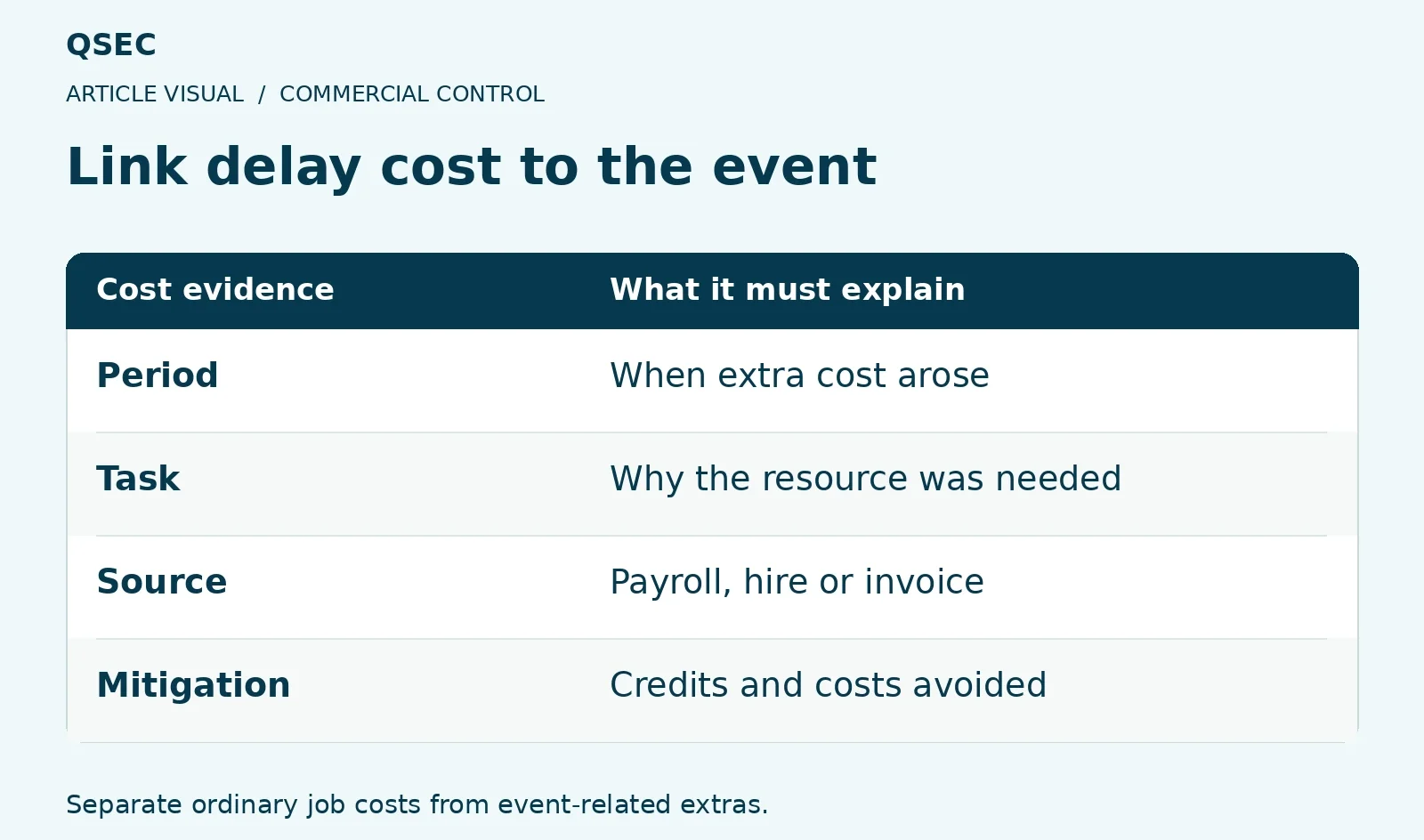
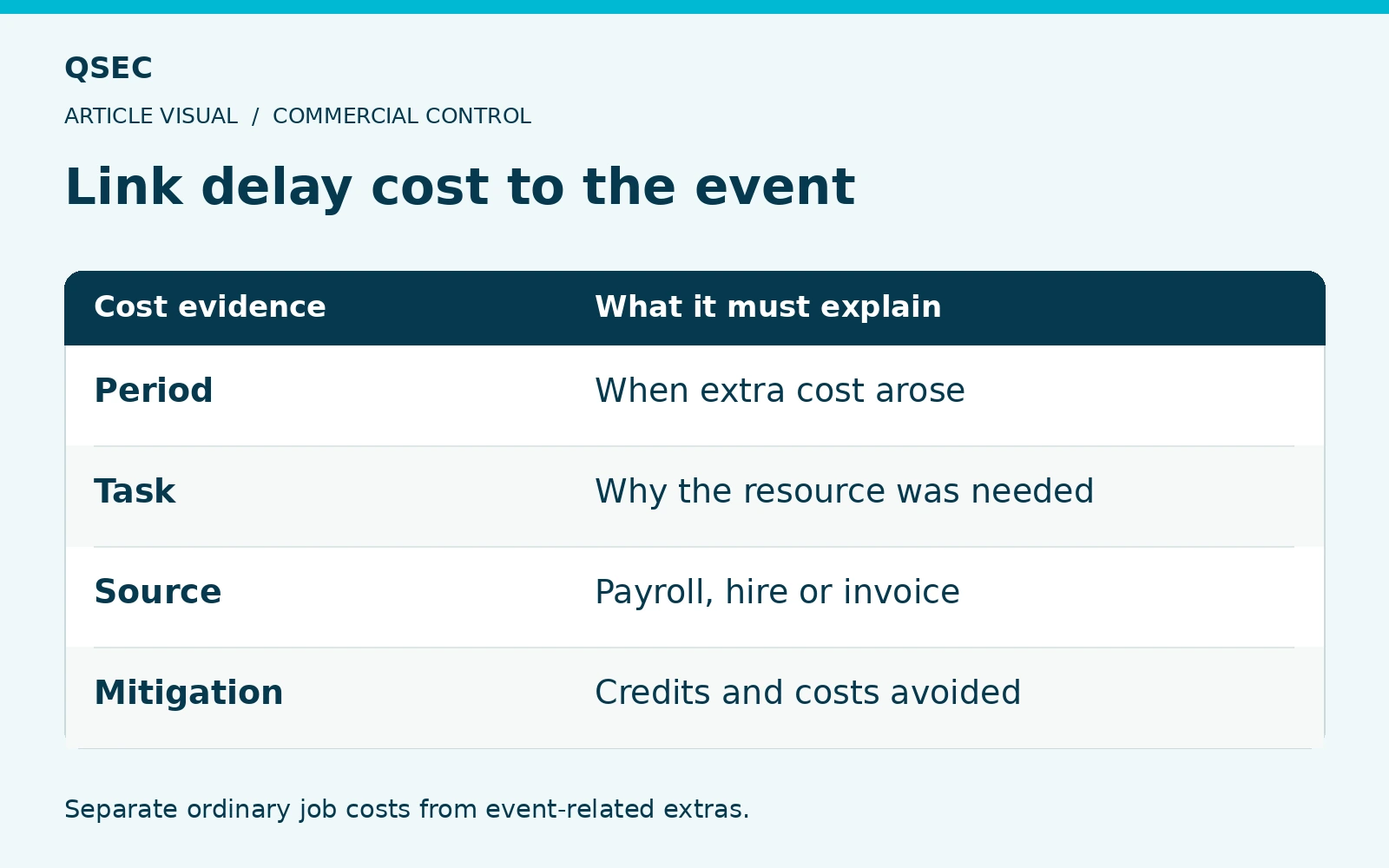
Link wages, bills and plant records to the event period. Use clear cost codes and show how shared costs were split.
Take out unrelated work and credit costs saved. Check that a cost in a variation is not also claimed under delay.
The costs are recorded. Can the claim explain why this event caused them?
- Event and terms
Identify the basis being relied on.
- Task, period and cost
Trace the resources to the effect.
- Net claim
Remove ordinary costs and double counting.
Use the contract basis, affected period and source records to build the net claim without overlap.
Test Each Cost Head
Longer site time needs a link to the cause and period claimed. Lost output needs work and resource records, not just all hours used on site.
Head-office costs need a sound basis too. A formula alone does not prove cause. Get advice on the terms and evidence where the claim route or method is unclear.
General guidance. Check your signed contract and the job facts. Get legal advice where needed.