
Labour cost per unit depends on the gang cost and its output. A low day rate can still give a high cost per square metre if the same work takes longer.
A low day rate can still produce a high unit cost. How much work gets finished?
Labour Cost Per Unit: Build The Gang Cost
For staff, use the full cost on your firm's pricing basis. For hired labour, check what the quoted rate covers.
Count paid setup and moves. Keep plant and materials separate unless they are in the gang sum, so each cost appears once.
Test The Output
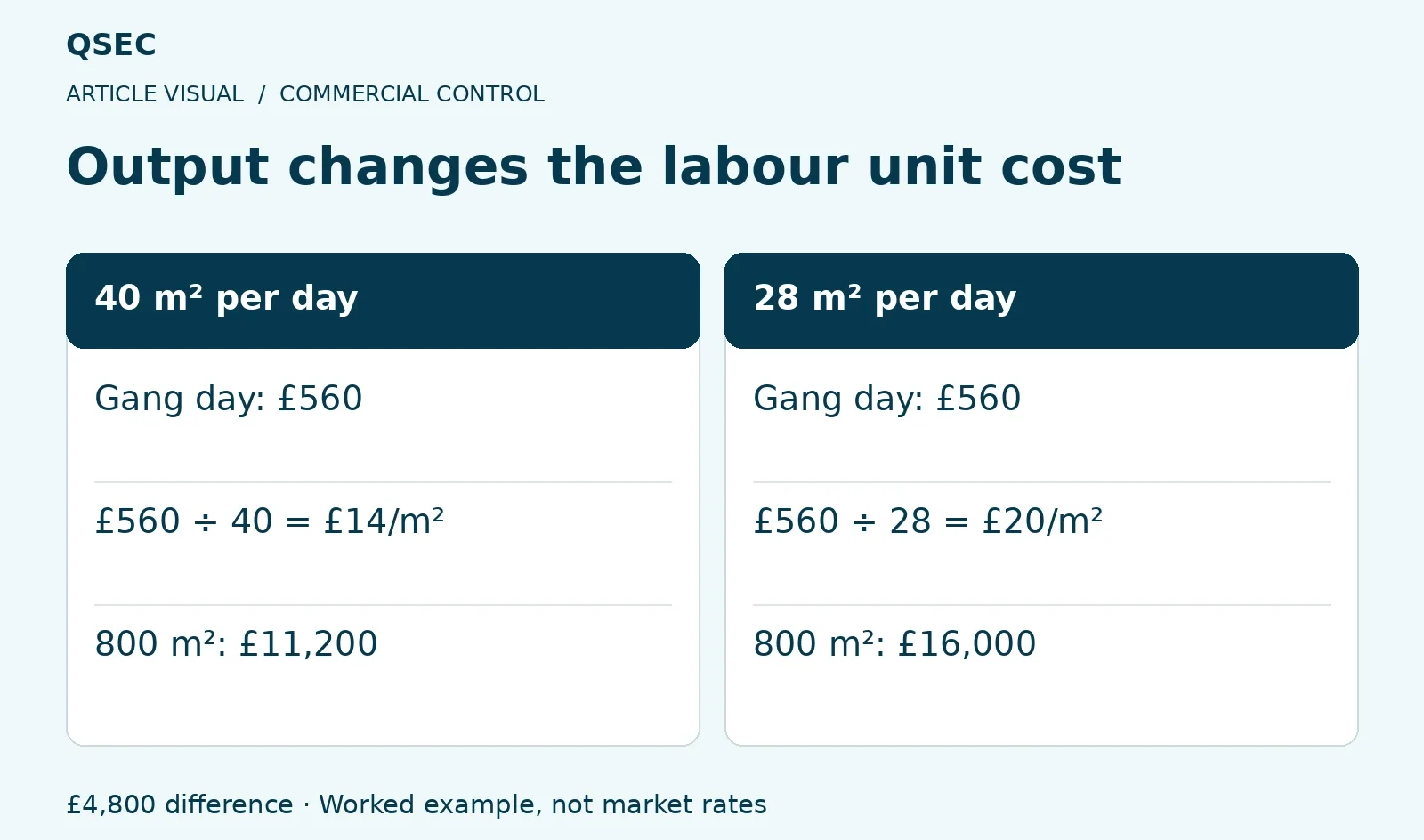
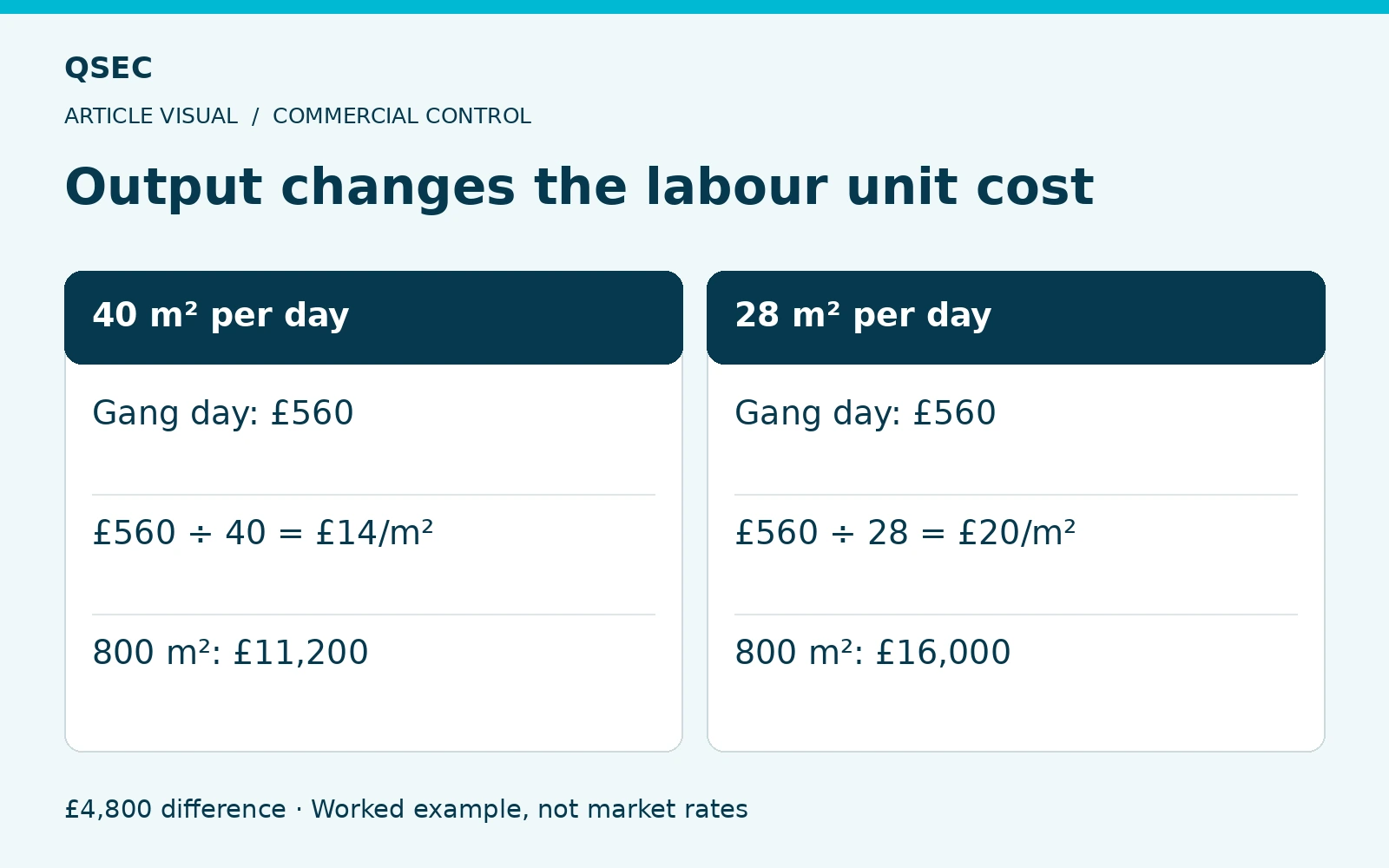
The table uses a £560 gang day as an example. At 40 m² per day, labour is £14 per m². At 28 m², it is £20.
Across 800 m² the gap adds £4,800. These figures show the maths, not market rates. Check access, room size, cuts and quality before setting output.
| Gang cost per day | Output per day | Labour per m² |
|---|---|---|
| £560 | 40 m² | £14 |
| £560 | 35 m² | £16 |
| £560 | 28 m² | £20 |
The gang costs £560 a day in this example. What happens when output falls?
- 40 m² a day
£560 ÷ 40 = £14 per m².
- 28 m² a day
£560 ÷ 28 = £20 per m².
- Across 800 m²
The £6 difference adds £4,800. Example only.
Use costs and output from the same paid day, then check access and finished scope before choosing the rate.
Check Scope And Margin
State whether the unit includes prep, fixing, finishes and clear-up. Keep waiting and rework separate when site records are used to check rates.
A 20% mark-up on £100 gives £120. A 20% margin on the sale price needs £125. Use the firm's agreed basis and check it before the bid goes out.
Record productivity by activity and distinguish productive time, waiting and rework when reviewing the labour allowance.
General guidance. Check your signed contract and the job facts. Get legal advice where needed.