
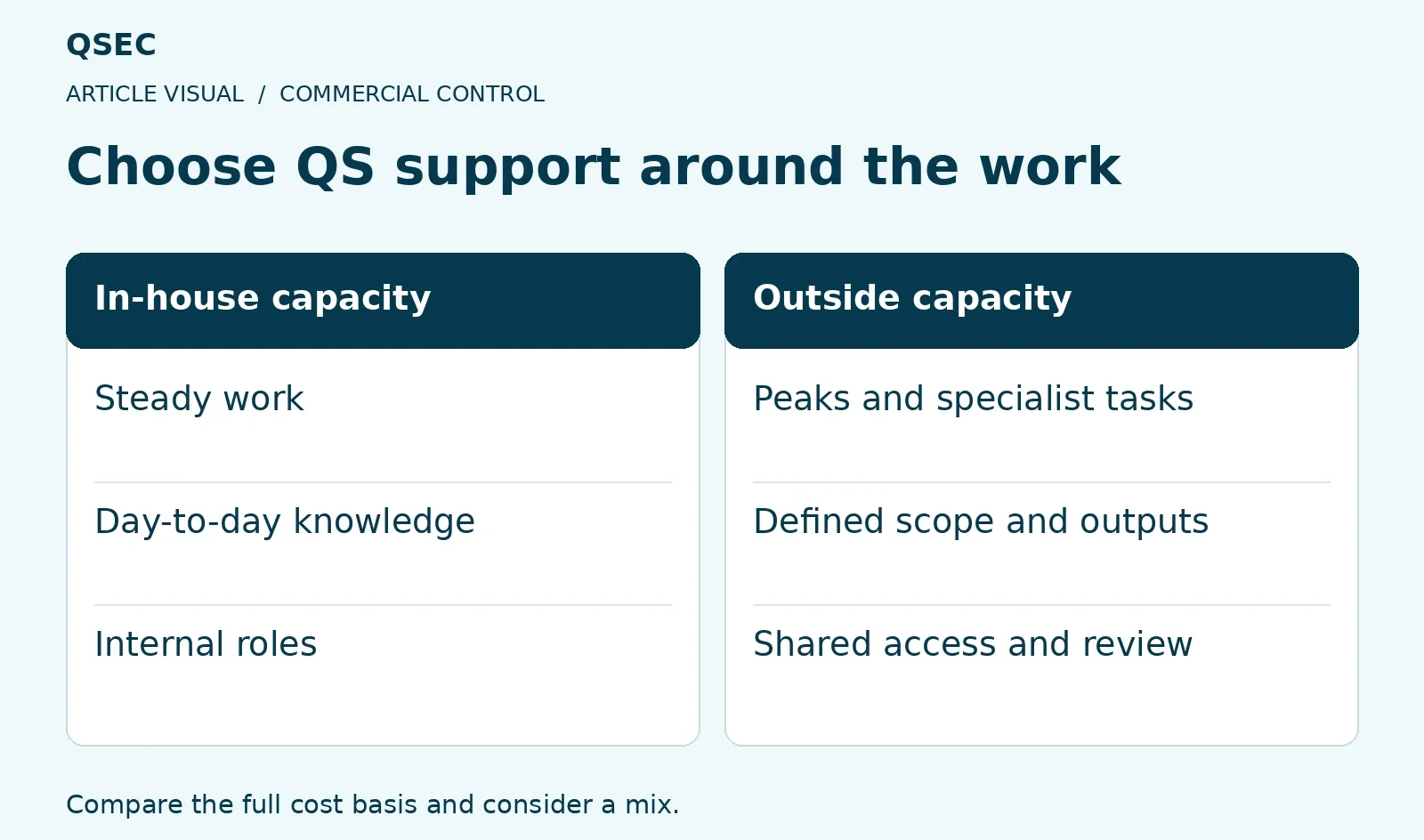
Start with the work you need done before choosing an in-house QS or outside support. A salary and a day rate are not the same cost basis, and either route needs clear outputs.
Which commercial work is constant, and where do the peaks fall?
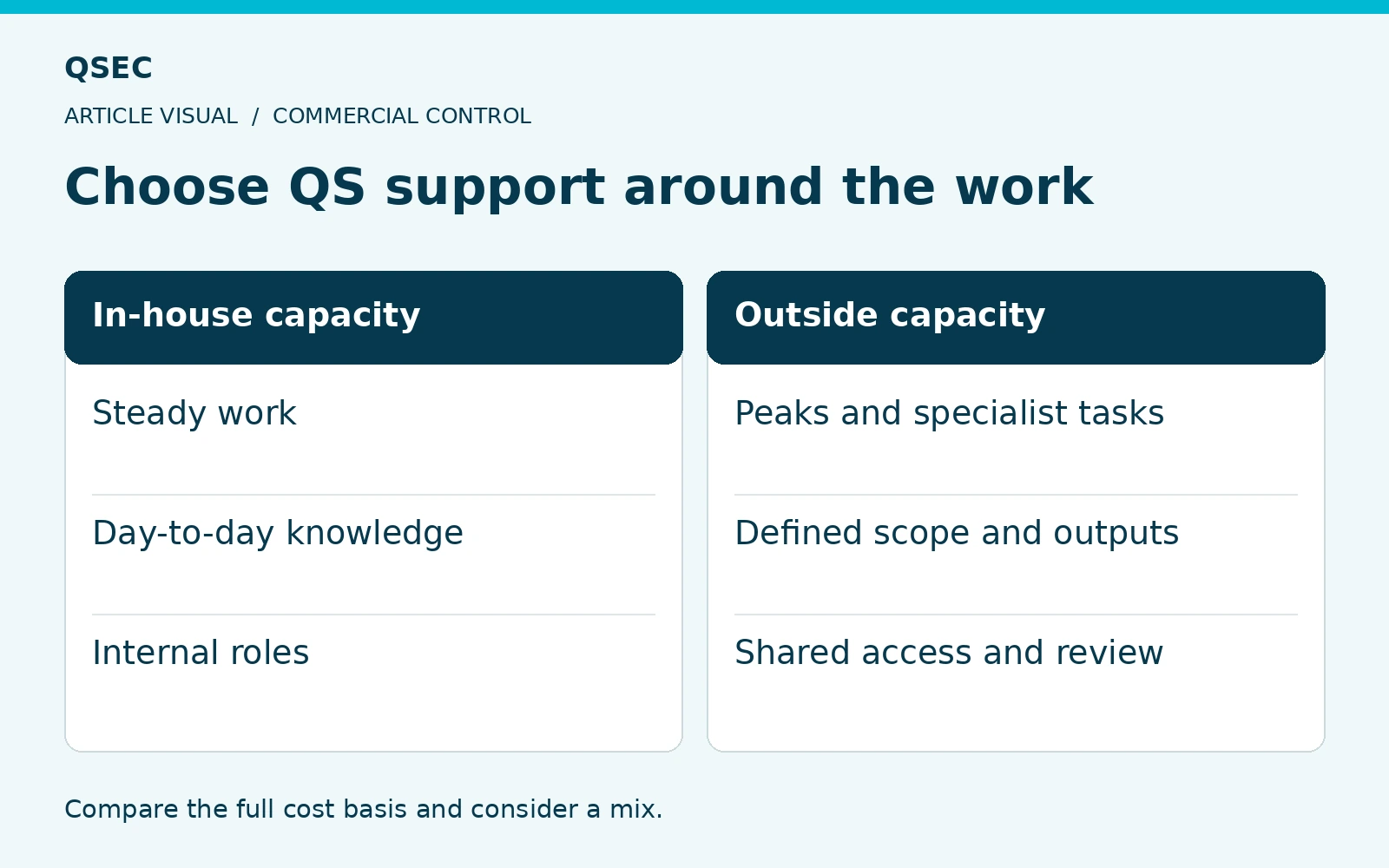
In-House QS Vs Outsourced QS: Map The Work
List routine tasks, live dates and new jobs due. Note the trade, sector and contract skills required.
Count hiring, salary, software and management time for a staff role. For outside help, include setup, fees and the time your team needs to brief and check the work.
Keep Roles And Records Clear
Name a contact who can supply the brief and approve action. Agree shared files, safe access and who owns the work.
Plan cover for leave and illness. Keep key job facts in the shared records so one inbox is not the only source.
An in-house role and outside support have different costs. Which mix fits the workload?
- Core workload
Identify the work needing regular ownership.
- Peaks and gaps
Map busy periods and specialist tasks.
- Full cost
Include management, briefing and review time.
Compare the full cost and capability against the work that actually needs doing.
Test A Mix
A core QS can lead regular tasks while scoped support covers peaks. A short rise in demand may not call for a permanent hire.
Neither route is always cheaper. Compare full cost and outputs, then review the mix as jobs change. Good handovers let both parties work from one cost and contract basis.
General guidance. Check your signed contract and the job facts. Get legal advice where needed.