
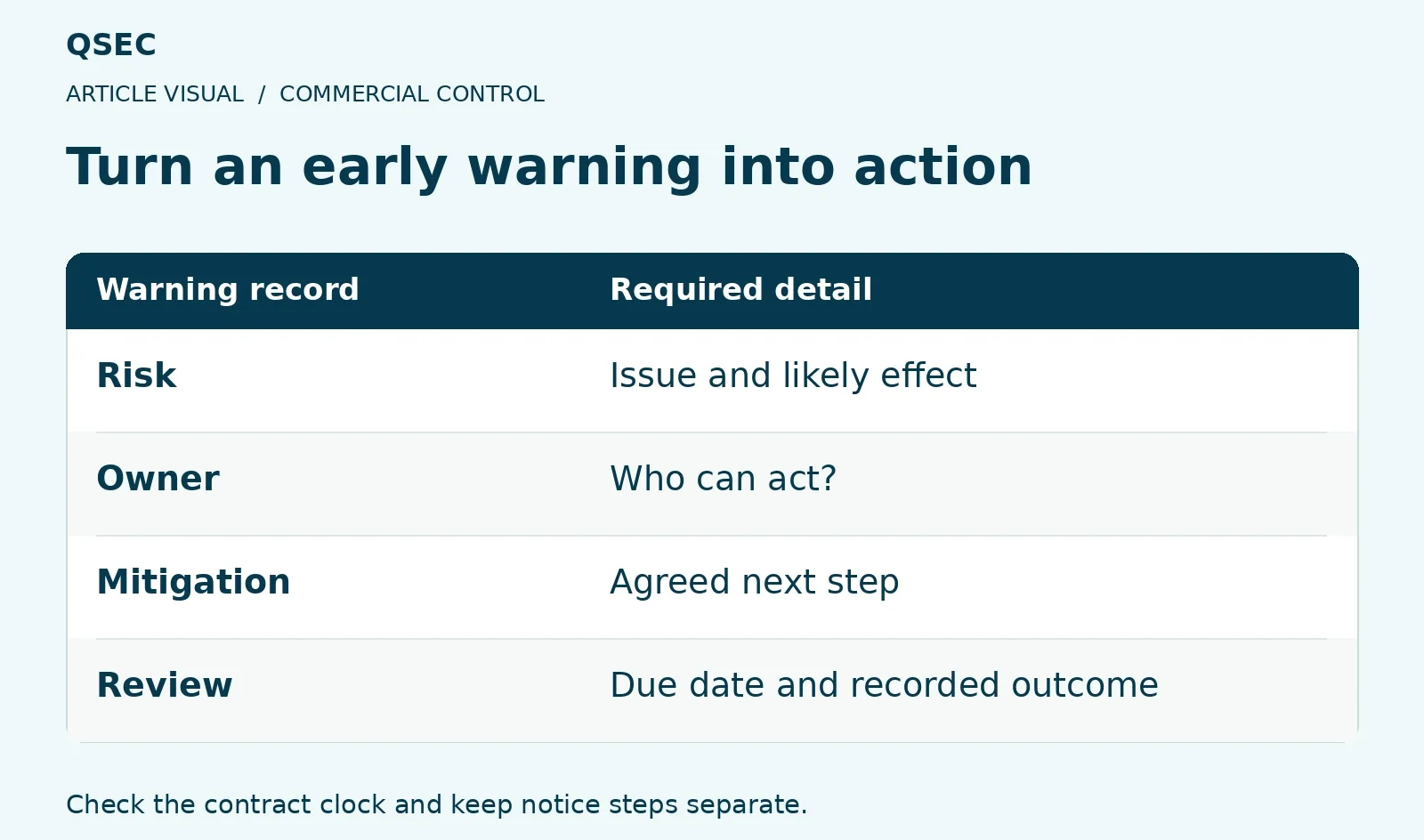
A risk raised early gives the team time to act before it adds cost or delay. A useful warning names the issue, its likely effect and what should happen next.
A risk log records an issue. What will the team do about it?
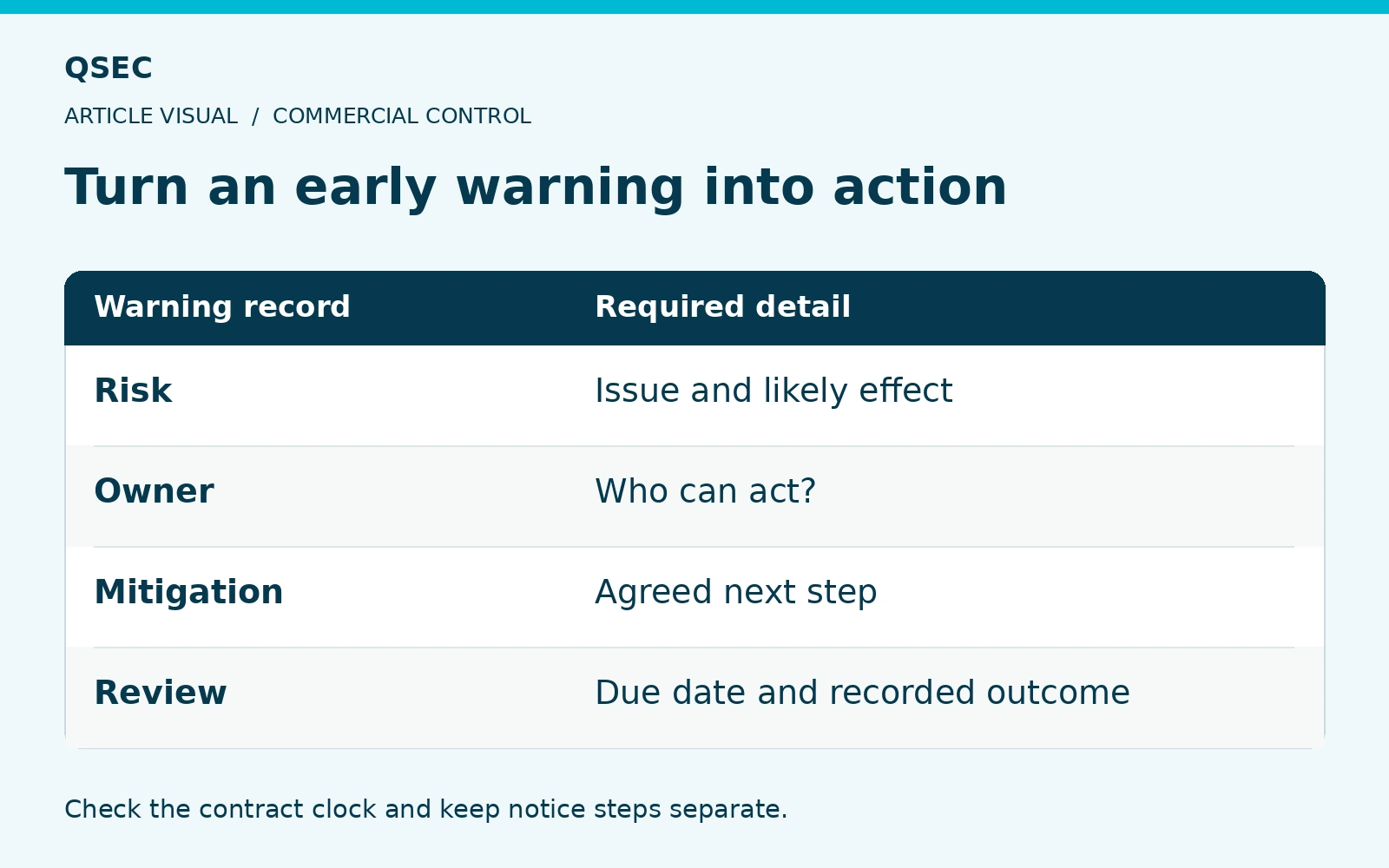
Make Your Construction Early Warning Process Clear
Log the event, date, place and person who raised it. State the likely effect on time, cost, scope or quality.
Keep the entry short and link the detail behind it. Name who will check the point and route the task to the right team.
Check The Contract Clock
A risk log is not a contract notice. Check what the terms require, who receives it and the service route.
NEC early warnings and compensation-event notices are separate steps. Follow both where needed, rather than assume one completes the other process.
The early warning is raised. Who owns the action, and when will it be checked?
- Raise
Describe the issue and possible effect.
- Act
Give the mitigation an owner and date.
- Review
Check the result and update the risk.
Track the practical response while handling any separate contractual notice through its own route.
Review And Close The Action
Use short routine reviews for large risks, old items and close deadlines. Record who acts and when, with the replies and decisions linked.
Do not close the entry just because an email was sent. Show the result and risk left so the next review can see whether the issue is settled.
General guidance. Check your signed contract and the job facts. Get legal advice where needed.