
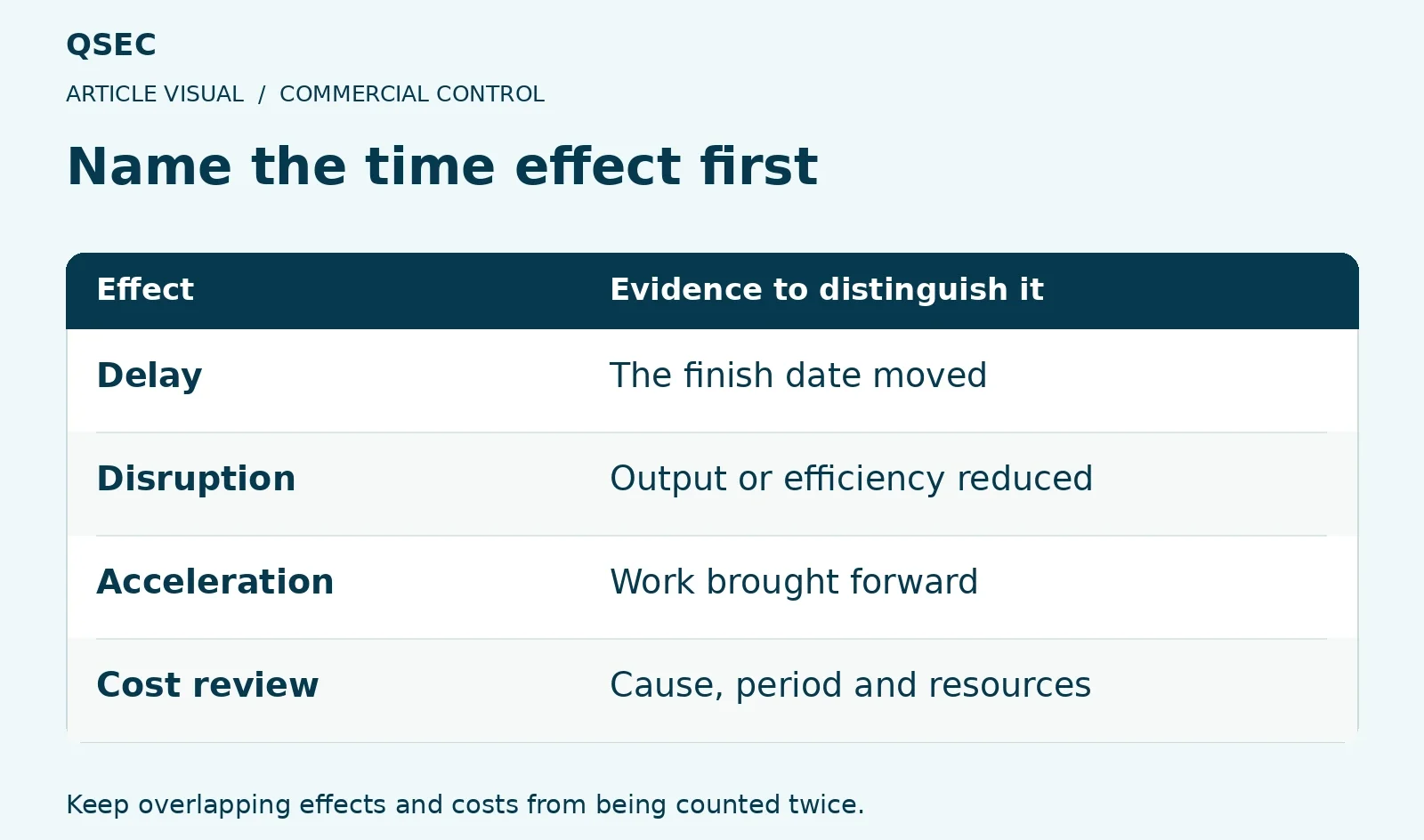
Extra site hours do not tell you whether the job was delayed, work was slowed or the team sought a faster finish. Name the effect first so the right cost and time records can be checked.
Is the problem a later finish, lost output or a faster programme?
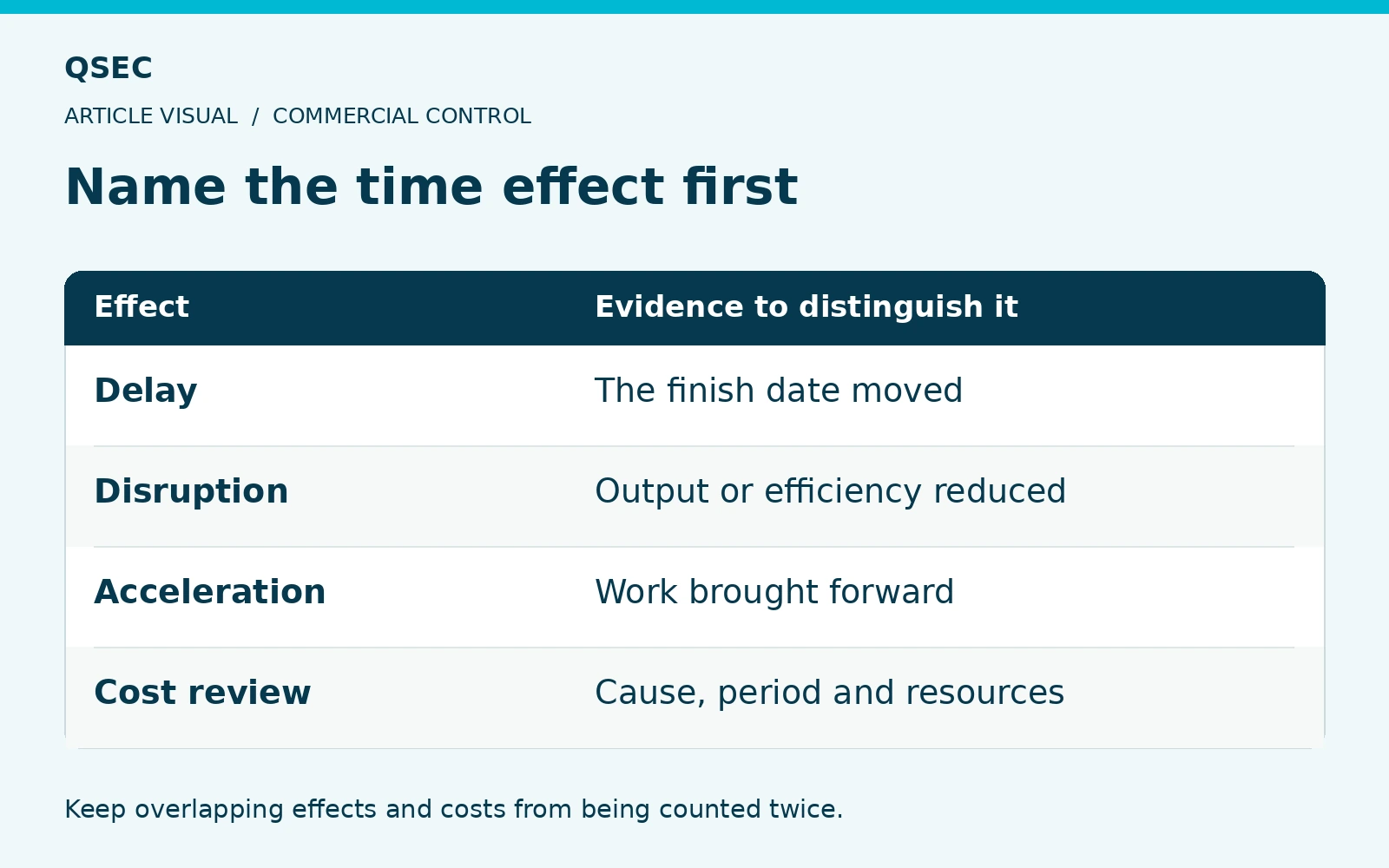
Keep Delay, Disruption And Acceleration Distinct
Delay means a task or finish moves later. Disruption means work needs more labour or plant for the same output. Acceleration means steps to reach an earlier or recovered finish.
One event can have more than one effect. Keep them apart in the claim rather than group all extra hours as delay.
Compare The Plan With The Work
Save the first programme and updates. Record access, sequence, labour, plant and output by task and date. Keep instructions, shifts and hours too.
A late task may not delay the finish. Slow work can add cost while the end date stays fixed. The records need to show which effect arose.
The event has several effects. Which cost belongs to each one?
- Delay
The relevant completion or work occurs later.
- Disruption
More input is needed for the same output.
- Acceleration
Work is sped up to recover or improve dates.
Keep the evidence and cost basis for each effect clear, and count a cost only once.
Avoid Counting Costs Twice
Link each cost to its cause and period. Check other causes and do not use the same staff hours for both longer site time and reduced output.
More labour does not by itself prove an instructed push to finish sooner. Check the aim, who asked for it and the contract route.
General guidance. Check your signed contract and the job facts. Get legal advice where needed.