
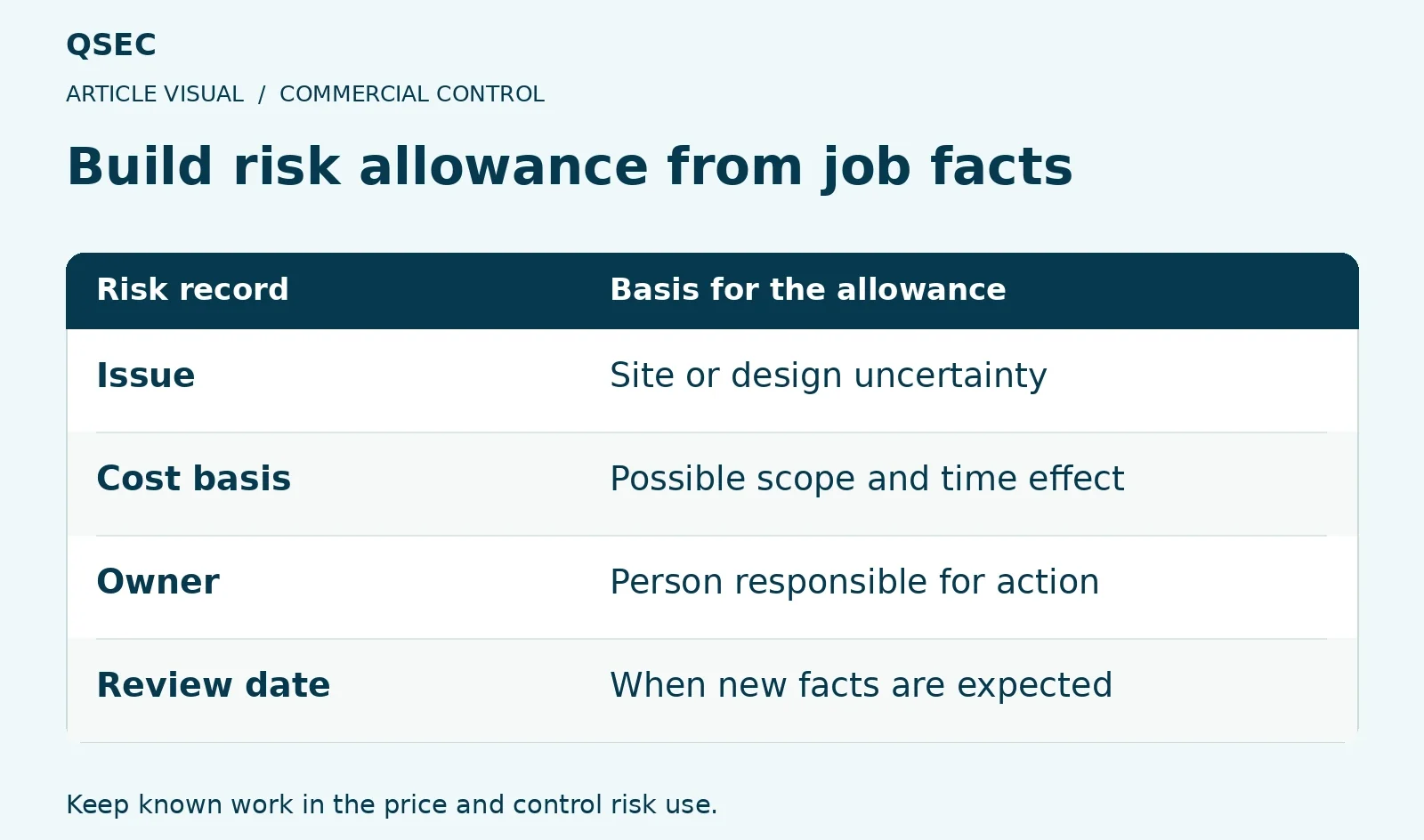
A flat contingency percentage does not show what could go wrong on the job. Build the risk allowance from the site and design facts, then review it as those facts become clearer.
Which project risks explain the contingency sum?
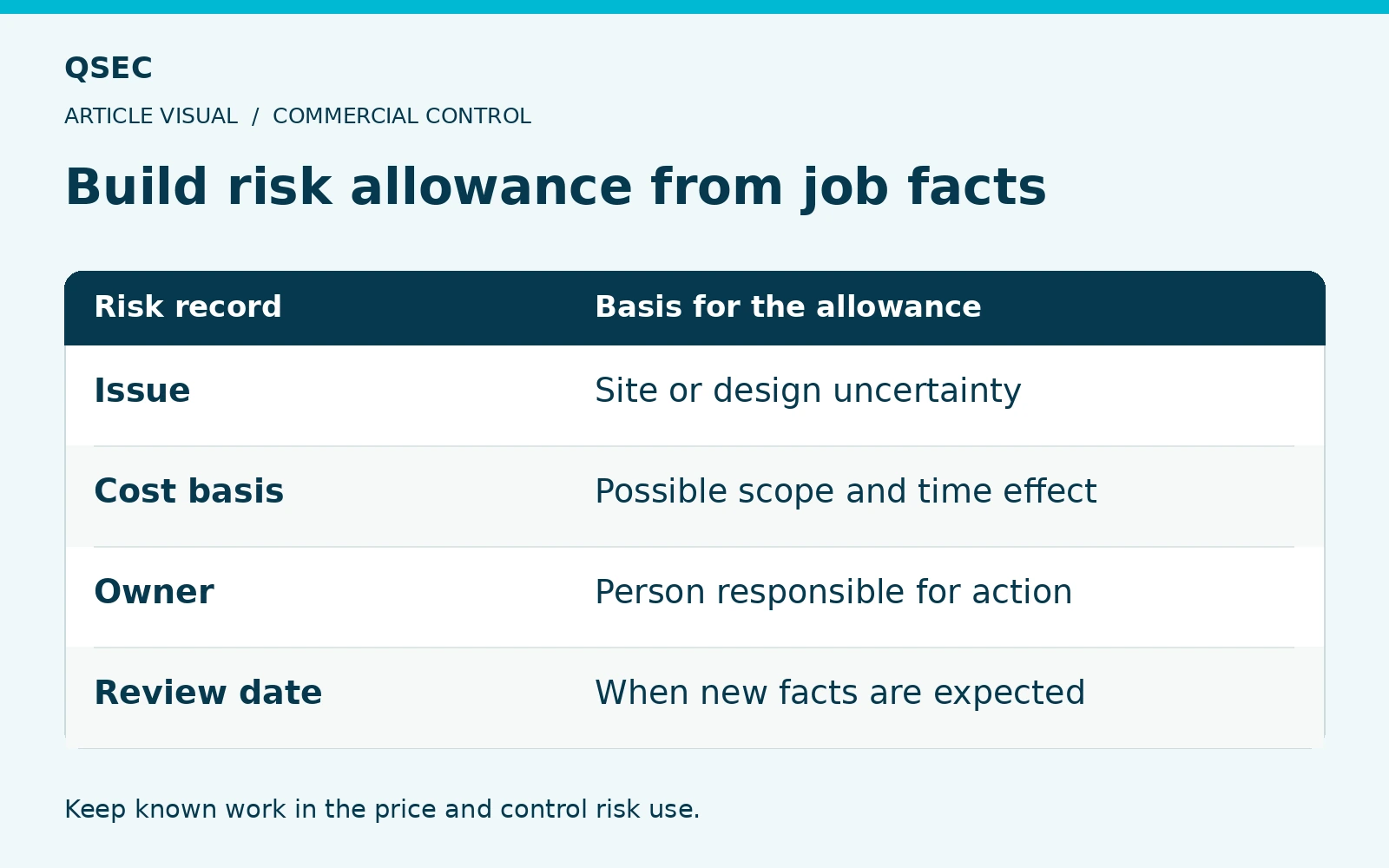
Build Construction Contingency From The Risks
Check survey gaps, design detail, access and site time. Review planning, utility links and how the work will be bought.
For each risk, state what may happen and the likely cost range. Check who carries it and what the team can do to reduce it.
Keep Known Work In The Price
Work you know is needed belongs in the scope cost. Do not put it in contingency just because a quote is still due.
Count each risk once. If a trade price already covers it, show that before adding the same risk to the central fund.
A percentage looks tidy. Can the fund be traced to the risks on this job?
- Identify
Describe the risk and likely cost range.
- Reduce
Give mitigation an owner and review date.
- Control
Record use, release and the balance.
Keep known work in the scope and use the risk register to control additions, use and release.
Control Use And Release
Agree who can approve use of the fund and keep each transfer on record. Show the cause, date and balance left.
Reduce the fund when new facts remove a risk. If it becomes known work, show the move into the scope price. That keeps the cost report clear and avoids a paper saving with no real change.
General guidance. Check your signed contract and the job facts. Get legal advice where needed.