
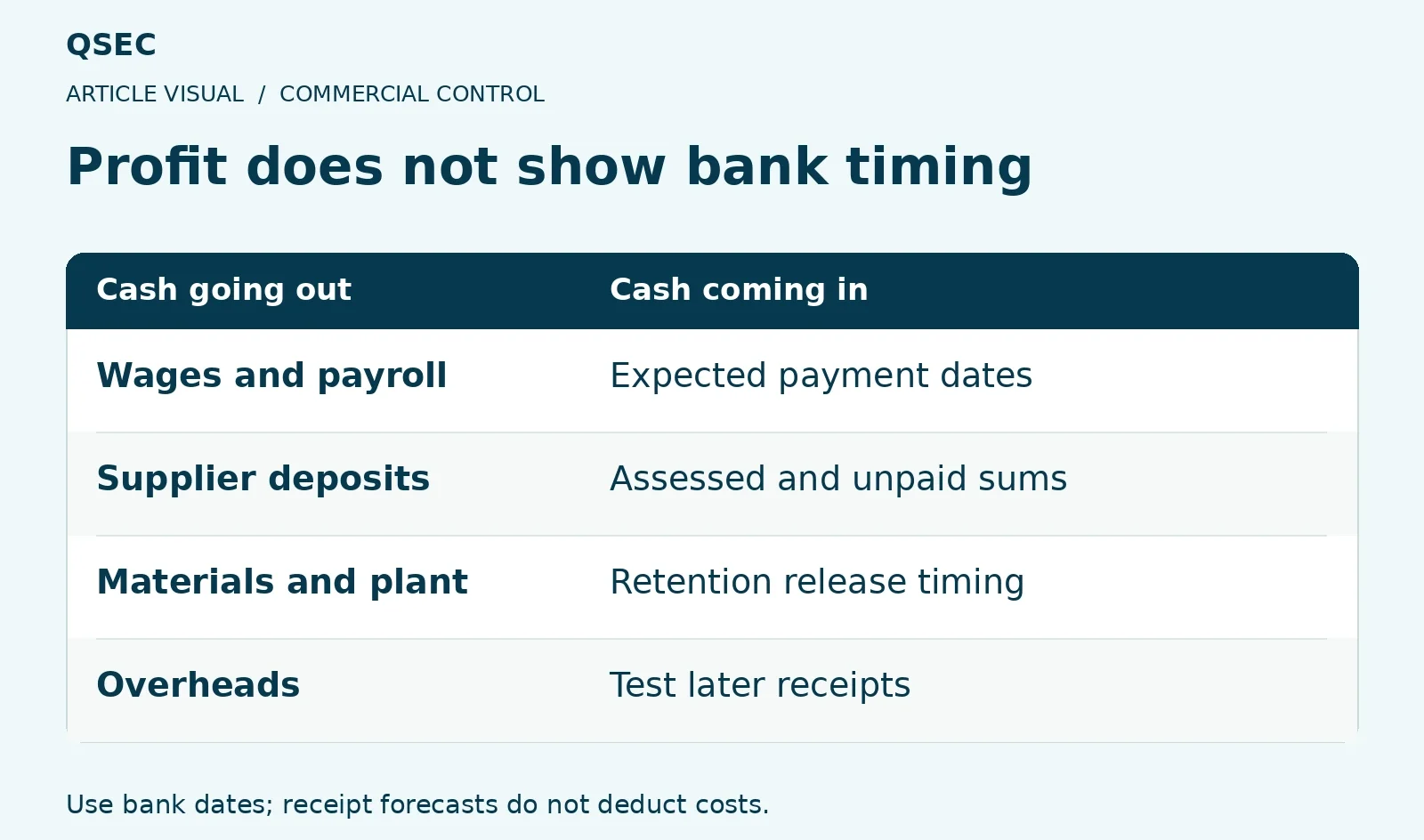
A job can make a profit and still use more cash than the firm has ready. Wages, deposits and materials may be paid long before the client pays for that work.
A profitable job can still run short of cash. Where is the timing gap?
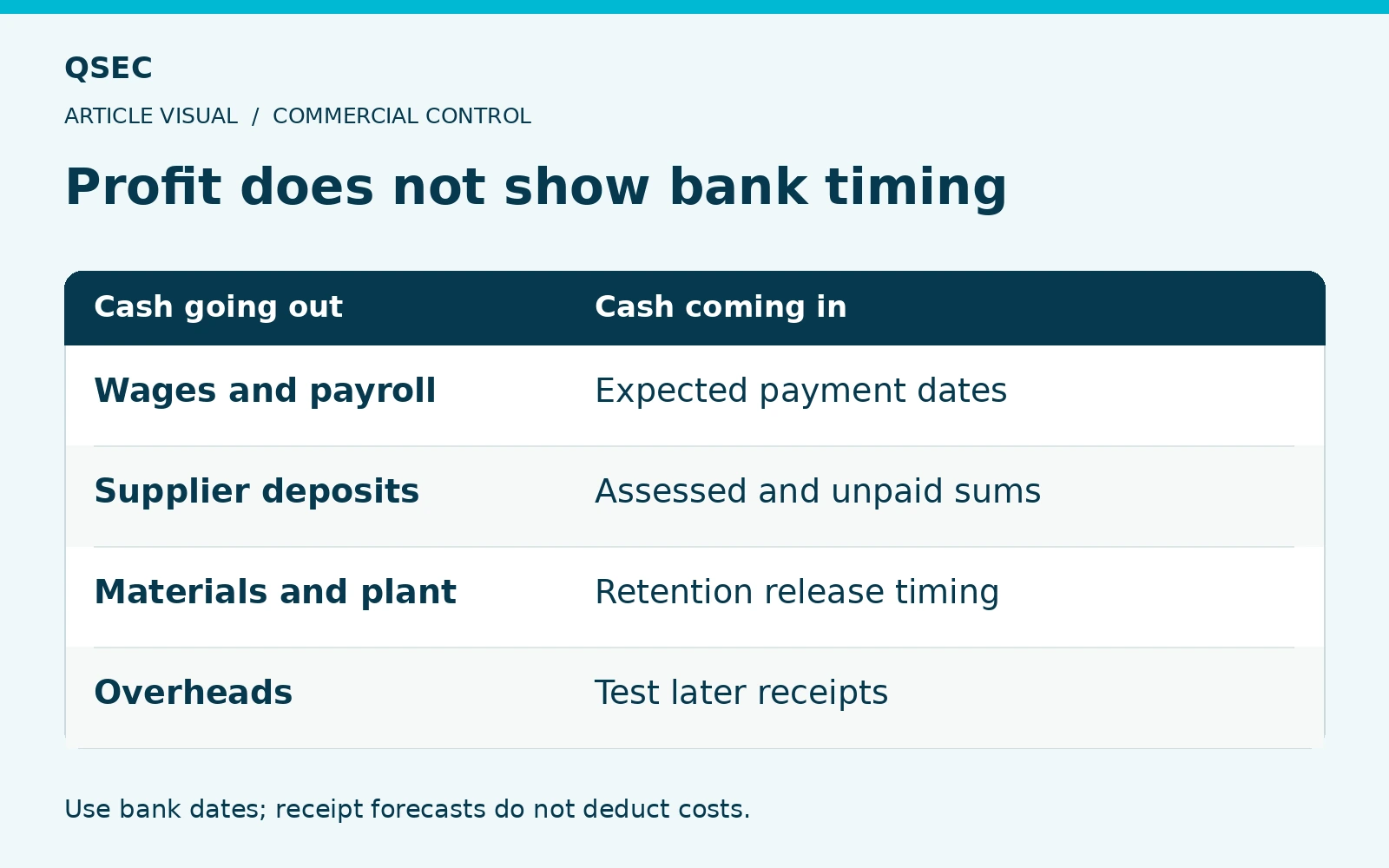
Construction Cash Flow Forecasting: Time Your Costs
Use the programme and buying plan to date labour, plant and trade payments. Add deposits and early orders where needed.
Include tax and finance costs on the agreed basis. Show retention and bond costs clearly and count each outgoing once.
Test The Cash Coming In
Use the claim and payment cycle, then assess likely receipt dates. Keep the sum claimed, value assessed and bank receipt apart.
An open change is not firm cash. Test a lower value or later receipt, with extra site time where relevant, so the cash gap is clear.
The expected margin looks sound. What happens if the next receipt arrives late?
- Money out
Plan labour, supplier and other payment dates.
- Money in
Use realistic dates for expected receipts.
- Stress test
Check delay scenarios and the cash gap.
Use the payment dates to test the funding gap rather than relying on the job’s final profit.
Use The Bank Facts
Replace past forecast entries with the money received and paid. Show differences and update dates for work still ahead.
Feed each job into the firm's cash plan with office costs and other work. Several jobs buying goods at once can put pressure on cash even if each forecasts a profit.
General guidance. Check your signed contract and the job facts. Get legal advice where needed.